Okra yellow vein mosaic virus in Pakistan: symptoms and control
Published 2026-11-17

Okra yellow vein mosaic virus is the most destructive disease of okra in Pakistan: it turns the leaf veins yellow in a net-like pattern, dwarfs the plant, and leaves the pods small, yellow, fibrous and tough. It is carried by whitefly, it has no cure, and on susceptible varieties it has been reported to take up to 84% of the yield — so the whole fight is about keeping whitefly off young plants and pulling out the first infected ones.
What is okra yellow vein mosaic virus?
Okra yellow vein mosaic virus is a begomovirus, a small DNA virus in the family Geminiviridae, and it is the most destructive disease of okra. The virus is present in all okra-growing regions of the world, and in Pakistan it is reported on the main okra varieties grown in Punjab and Sindh.
The virus infects the plant at any stage of growth, but the most susceptible stage is 35 to 50 days after sowing, when the plants are growing fast and whitefly numbers are building. Once inside the plant, the virus stays there for the life of the plant.
What does yellow vein mosaic look like?
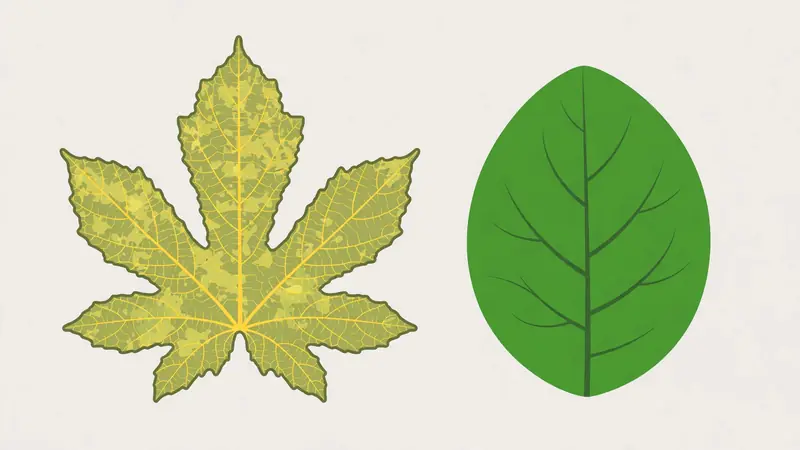
The first sign is a diffuse, mottled look on young leaves, with clearing of the small veins starting near the leaf margin about 15 to 20 days after infection. The vein clearing develops into a yellow network: a fine mesh of yellow veins enclosing islands of green tissue, and in severe cases the whole leaf turns yellow or creamy.
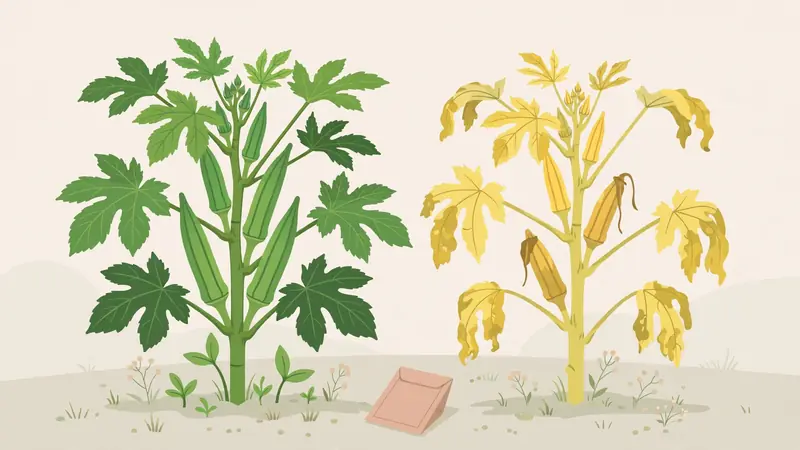
Infected plants are stunted, their leaves stay small, and the fruits are the clearest loss: infected pods are covered in yellow or creamy colour, small, fibrous and tough, and they are hard to sell. A field with heavy infection looks yellow from a distance, not green.
How does whitefly spread the virus?
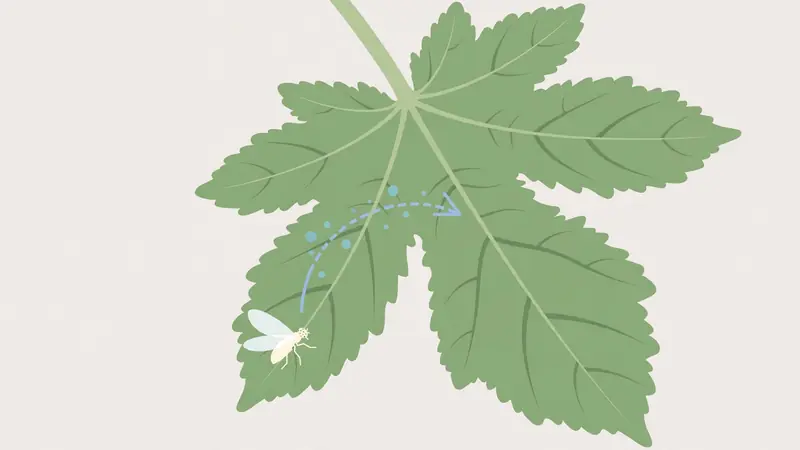
Whitefly, Bemisia tabaci, is the natural vector of the virus and has carried it for about a hundred years. The whitefly picks the virus up while feeding on an infected plant — about one hour of feeding is enough — and passes it on after about 30 minutes of feeding on a healthy plant, carrying it from plant to plant.
Whitefly numbers build through the summer: field studies in Pakistan recorded whitefly activity starting in the first week of April and peaking in the last week of April. High temperatures with moderate rainfall favour both the whitefly and the disease, so the hot season is the danger season.
How much damage does yellow vein mosaic cause?
Yellow vein mosaic virus is responsible for 80–90% of yield losses in okra where the disease is severe, and in Pakistan losses of up to 84% have been reported on susceptible varieties. In epidemic conditions the loss can reach 90%, and a field infected early can lose almost its entire marketable crop.
The loss is not only fewer pods. Infected pods are small, yellow, fibrous and tough, so even the pods that are picked fetch a lower price or cannot be sold at all. The disease hits both the quantity and the quality of the harvest.
Can an infected okra plant be cured?
No — there is no cure for a virus-infected okra plant, and no spray can remove the virus from leaves that already show the yellow vein network. An infected plant stays infected, keeps feeding whiteflies, and becomes a source of virus for every healthy plant around it.
The honest response is to pull infected plants out early and destroy them away from the field, and put the effort into protecting the plants that are still healthy. Keeping one sick plant out of hope is how a few yellow leaves become a yellow field.
How do I control yellow vein mosaic?
Control means keeping whitefly off the crop and removing every source of virus, because the virus itself cannot be sprayed away. Start with healthy seed, sow at a time that misses the worst whitefly pressure where your area allows, and inspect the crop from the first true leaves onward.
- Scout from the start. Check young leaves weekly for vein clearing and the yellow network, and pull and destroy any plant that shows symptoms the same day you see it.
- Protect young plants. The 35-to-50-day stage is the most susceptible, so that is when whitefly control matters most — nets over the nursery and early protection pay back here.
- Use plant extracts where they fit. A University of Agriculture, Faisalabad trial found neem extract at 5% the most effective of four plant extracts tested against the virus and its vector under field conditions. This is a research finding, not a prescription — check local advice first.
- Keep the field clean. Remove weeds that host whitefly and the virus, and clear crop debris after harvest so the virus has nowhere to survive between seasons.
- Control whitefly, not the virus. Oils and other whitefly measures reduce spread, and products with active ingredients used against whitefly are an option where pressure is high. No doses are given here; check the current product label and local extension advice first.
- Choose varieties with care. Varieties such as Sabz Pari, Pusa Sawani, Punjab Selection and Arka Anamika have been used in Pakistani trials of the disease — ask your seed supplier which current varieties carry tolerance, and treat the claim as a starting point, not a guarantee.
What to do next
- Walk the okra plot today and check young leaves for vein clearing and the yellow network.
- Photograph anything suspicious and check it on PhytoAssist.
- Pull out infected plants the same day, and plan the next sowing with SabziPlan so okra misses the worst whitefly pressure.
Plan the next okra sowing
Use SabziPlan to schedule okra sowing and rotation so the crop misses the worst whitefly pressure and never follows a host crop.
Advisory note
This article is advisory guidance, not a definitive diagnosis. A photo-based check can narrow down the likely disease, but only laboratory confirmation or an extension officer's field visit gives a certain diagnosis. Never spray on the basis of a blog post alone — check the current product label and your local agriculture department advice first. No pesticide doses are given in this article.
By Ghulam Mustafa — Final-year BSc (Hons.) Agriculture student, specialising in Plant Pathology, The Islamia University of Bahawalpur (IUB), Pakistan. CGPA 3.98/4.00.
Frequently asked questions
Is yellow vein mosaic caused by a fungus?
No. Okra yellow vein mosaic is caused by a virus, a begomovirus carried by whitefly, not by a fungus. Fungicides do not control it, and spraying a fungicide on yellow-veined leaves wastes money. Control works only by stopping whitefly, removing infected plants, and starting with clean seed and tolerant varieties.
Can I eat okra from an infected plant?
Pods from an infected plant are usually small, yellow, fibrous and tough, and they are poor to eat and hard to sell. The virus itself does not make okra unsafe, but the pods are not worth picking. The real loss is economic: the plant keeps producing less, and what it produces is unmarketable.
Does yellow vein mosaic spread to other vegetables?
The whitefly that carries the virus also feeds on chilli, tomato, cotton and many weeds, and related begomoviruses attack those crops too. An okra infection does not directly infect another vegetable, but the same whitefly population threatens nearby crops, so controlling whitefly protects the whole farm, not just the okra.
Should I spray an infected okra plant?
Spraying an infected plant will not cure it, because the virus lives inside the plant. Remove the plant instead. Sprays are only useful against whitefly on healthy plants, to stop the virus reaching them. Always check the product label and local extension advice before buying or applying anything.
Sources
- Yellow vein mosaic disease in okra: an overview on causal agent, vector and management (Phyton, 2021; University of Sargodha) — consulted 2026-11-17
- Management of okra yellow vein mosaic virus and its vector through plant extracts (Journal of Plant Pathology & Microbiology, 2016; University of Agriculture, Faisalabad) — consulted 2026-11-17
Curl returns 403 (bot protection); trial findings verified via search on 2026-11-17. - Epidemiological characterization of okra yellow vein mosaic virus and its vector (The Free Library) — consulted 2026-11-17
Continue: SabziPlan — kitchen-garden planner · Analyse a photo of the symptom · Chilli leaf curl — another whitefly virus · Cotton bollworms in Pakistan · Potato late blight in Pakistan · Onion purple blotch in Pakistan