Onion purple blotch in Pakistan: symptoms and control
Published 2026-11-17
Onion purple blotch is the most damaging disease of onion in Pakistan: it starts as small white sunken spots on the leaves, turns them into zonate purple blotches, kills the foliage, stalls the bulb and can girdle the seed stalk so the crop sets no seed at all. It is caused by the fungus Alternaria porri, it loves warm, humid weather, and it is worst exactly when the bulb should be filling — which is why the first white speck is worth acting on.

What is onion purple blotch?
Purple blotch is a fungal disease of onion caused by Alternaria porri, a fungus that attacks all the above-ground parts of the crop, including the leaves, the seed stalk and the bulb. It is the most challenging and yield-limiting disease of onion in Pakistan and in most onion-growing regions of the world.
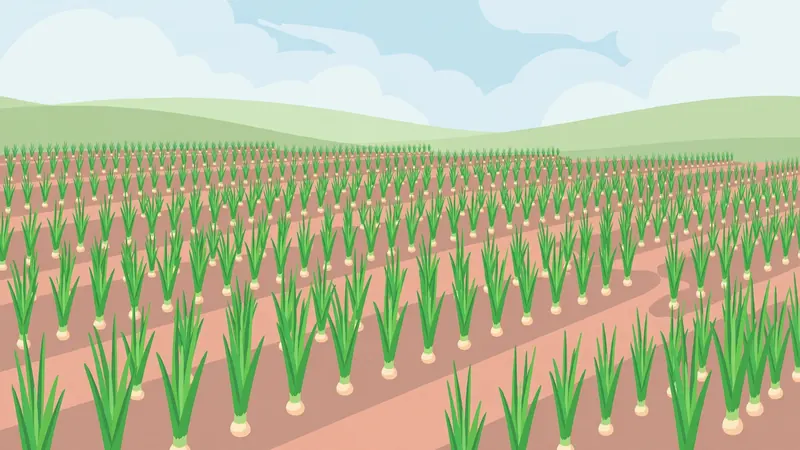
Onion is a major vegetable in Pakistan, grown on about 135,490 hectares producing about 1.85 million tons, and purple blotch is the disease that most often decides whether that crop pays. The fungus survives in plant debris and waste material, and its spores start infecting leaves whenever the weather turns humid.
What does onion purple blotch look like?
Purple blotch starts on older leaves and flower stalks as small, elliptical, sunken, whitish specks. As the disease advances the spots grow, turn brown, become zonate with ringed markings, and develop a reddish-brown to purple colour at the margins — the purple blotch that gives the disease its name.
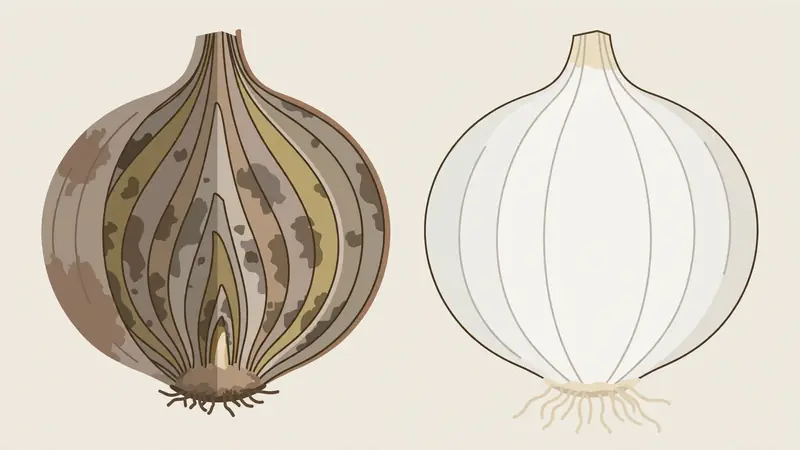
In severe attacks the blotches enlarge, become covered with dark spores, and the leaves wilt and die. The fungus also rots bulb tissue and yellows the neck, delays bulb formation and maturity, and girdles the seed stalk until it turns necrotic and seed production fails completely.
How much damage does purple blotch cause?
Purple blotch causes 5–50% losses in onion fields around the world, and in neighbouring India losses of 2.5–97% have been reported in bulb and seed crops. The range is wide because the damage depends on the variety, the weather and when the infection arrives — an early attack on a susceptible variety is the expensive one.
Pakistani field screening shows how much variety matters: the varieties Phulkara and Ceylon showed resistant responses with disease severity of about 8–9%, while Desi Black and Red Imposta were highly susceptible at 67–79% severity. Variety choice alone can be the difference between a crop and a failure.
What weather favours purple blotch?
Purple blotch favours warm, humid conditions, with an optimum temperature of about 25°C. The fungus enters through the stomata and leaf surface after forming infection structures, and it needs leaf wetness to germinate — dewy mornings, humid spells and overhead irrigation all give it the moisture it needs.
Dense planting that traps humidity, heavy nitrogen that grows soft, lush leaves, and leaves that stay wet into the day all make the disease worse. The practical rule is the same as for most leaf fungi: dry leaves, open canopy, and no water sitting on the foliage overnight.
How do I control onion purple blotch?
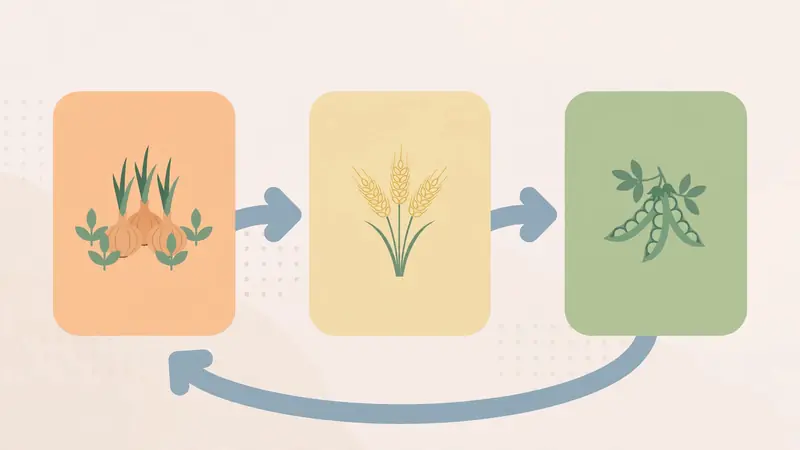
Control starts with the variety and the field. Grow a resistant variety such as Phulkara where it suits your area, rotate onion away from the same plot, and keep the field clean of debris where the fungus survives between seasons.
- Scout weekly. Check older leaves first for the small white sunken specks; the earlier the spots are found, the more of the canopy can still be saved.
- Keep the leaves dry. Water at the base in the morning, avoid overhead irrigation, and space plants so air moves through the crop and leaves dry during the day.
- Feed in balance. Balanced fertilisation grows tougher leaves; heavy nitrogen grows soft, lush foliage that the fungus infects easily.
- Clean up after harvest. Remove and destroy infected leaves and debris so the fungus has nowhere to survive until the next onion crop.
- Use plant activators and extracts where they fit. A 2025 University of Agriculture, Faisalabad study found salicylic acid the most effective of four plant activators tested against purple blotch under greenhouse and field conditions, and field work has found moringa leaf extract the most effective plant extract, followed by neem and garlic. These are research findings, not prescriptions — check local advice first.
- Spray protectively when needed. A 2014 Faisalabad field trial found mancozeb gave the lowest disease incidence among the fungicides tested. No doses are given here; check the current product label and local extension advice first.
What to do next
- Scout the onion crop this week, older leaves first, and look for the small white sunken specks.
- Photograph anything suspicious and check it on PhytoAssist.
- Plan next season's rotation with the crop-rotation planner and ask your seed supplier about Phulkara or Ceylon.
Plan a rotation that breaks the cycle
Purple blotch survives in plant debris. Use the crop-rotation planner to keep onion out of the same plot and give the next crop a clean start.
Advisory note
This article is advisory guidance, not a definitive diagnosis. A photo-based check can narrow down the likely disease, but only laboratory confirmation or an extension officer's field visit gives a certain diagnosis. Never spray on the basis of a blog post alone — check the current product label and your local agriculture department advice first. No pesticide doses are given in this article.
By Ghulam Mustafa — Final-year BSc (Hons.) Agriculture student, specialising in Plant Pathology, The Islamia University of Bahawalpur (IUB), Pakistan. CGPA 3.98/4.00.
Frequently asked questions
Is purple blotch the same as downy mildew?
No. Purple blotch is caused by Alternaria porri and shows zonate purple blotches that start as small white sunken specks. Downy mildew shows a greyish-purple fuzzy growth on the leaf, mostly in cool, wet weather. Both kill leaves, but they look different and are controlled differently, so check the spots before you spray.
Can I eat onions with purple blotch?
Bulbs with only mild leaf infection are fine to eat after the damaged outer layers are removed. Bulbs with neck rot or soft, rotting tissue should be discarded, not stored — rot spreads in storage and ruins neighbouring bulbs. Never store a wet or rotting bulb with healthy ones.
Does purple blotch spread to garlic?
Purple blotch attacks onion and its close relatives, including garlic and shallot, though onion is the main host in Pakistan. The same field hygiene, rotation and resistant-variety rules apply to garlic, and infected onion debris should not be left where garlic will be planted next.
Should I spray as soon as I see spots?
Spraying early, when the first spots appear on older leaves, protects the healthy foliage that is still feeding the bulb. Waiting until the leaves are half dead wastes the spray, because dead leaves cannot be saved. Always check the product label and local extension advice before buying or applying anything.
Sources
- Investigating the biochemical variations in onion leaves due to purple blotch disease and its management through induced resistance (PLOS ONE, 2025) — consulted 2026-11-17
- Investigating the biochemical variations in onion leaves due to purple blotch disease and its management through induced resistance (PMC full text) — consulted 2026-11-17
- Assessment of yield losses caused by purple blotch disease in onion and its management (Pakistan Journal of Phytopathology 26(2), 2014) — consulted 2026-11-17
Curl returns 403 (bot protection); trial findings verified via search on 2026-11-17.
Continue: Plan a rotation that breaks the cycle · Analyse a photo of the symptom · Onion purple blotch in the encyclopedia · Potato late blight in Pakistan