Potato late blight in Pakistan: symptoms and control
Published 2026-11-17
Potato late blight is the fastest potato disease in Pakistan: in cool, wet weather it turns leaves water-soaked and black, rots stems, reaches the tubers, and can destroy a field within days. It is caused by Phytophthora infestans, the same organism behind the Irish potato famine, and it can take the whole crop when the weather favours it — which is why the first water-soaked spot is an emergency, not a warning.
What is potato late blight?
Potato late blight is a disease of potato and tomato caused by Phytophthora infestans, a fungus-like organism from the oomycetes, not a true fungus. It attacks leaves, stems and tubers, and it spreads by spores that swim and germinate in leaf wetness — which is why cool, humid weather with long wet nights is its favourite condition.
Unlike most fungi, late blight cannot survive in soil or dead plant debris for long; it survives in infected tubers, in cull piles and on volunteer potato plants. A single infected tuber planted in spring can start an epidemic, which is why clean seed is the first line of defence.
What does potato late blight look like?
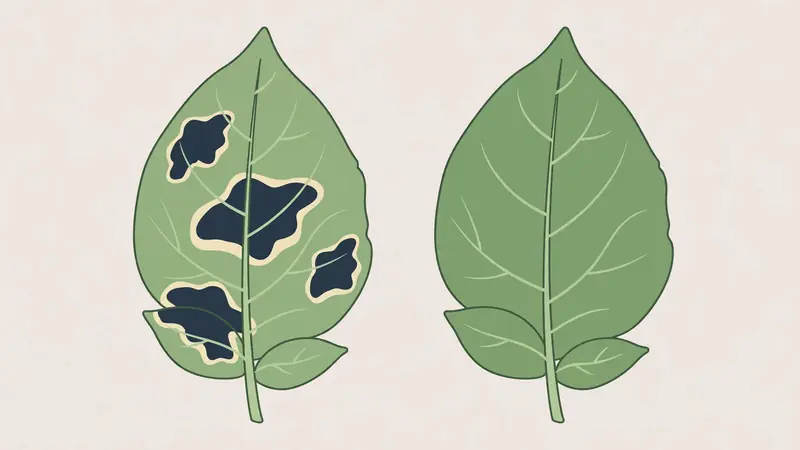
Late blight appears first on the leaves as pale green, water-soaked spots, often starting at the leaf tips or edges. The spots enlarge into dark brown or black dead areas with a pale yellowish-green border, and on a humid morning the underside of the lesion shows a pale white mould — the surest field mark of the disease.
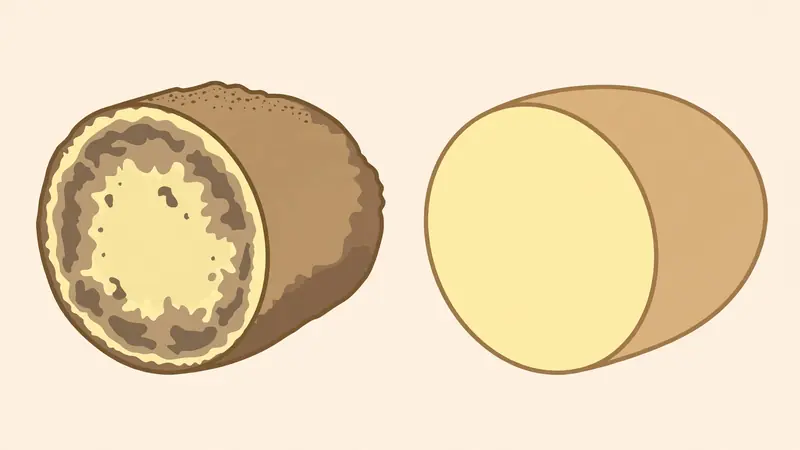
Infected stems turn brown to black, and the tubers develop brown, slightly sunken rot that spreads inward from the skin. In Pakistan the first symptoms usually appear from December, when the cool, damp winter weather arrives, and the disease then moves fast.
How fast can late blight destroy a crop?
Very fast. Under cool, humid conditions a late blight epidemic can destroy a field in a few days, and the pathogen can cause total yield loss under favourable epidemic conditions in Pakistan. The spores multiply on wet leaves, each new lesion releases thousands more spores, and a single rainy week can turn a few spots into a blackened field.
A 2019 field trial at Kasur recorded 74% disease incidence in the untreated control within a week of the trial starting — a measure of how quickly the disease builds when nothing is done. That speed is why late blight is managed preventively, not after the field is already black.
What weather drives late blight?
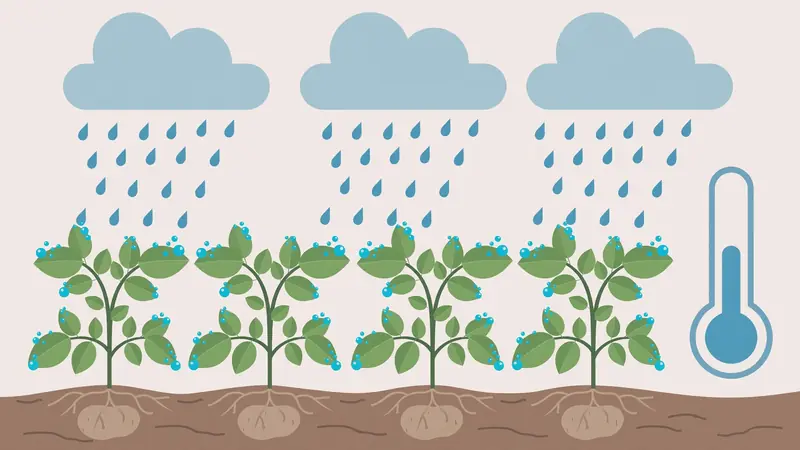
Late blight loves mild temperatures with high humidity and long leaf wetness — cool nights, heavy dew, fog and rain. Wet leaves are the trigger: spores need free water on the leaf to infect, and a canopy that stays wet into the morning is an open invitation.
Overhead irrigation late in the day, dense planting that traps humidity, and low-lying wet patches in the field all make it worse. The practical rule is simple: anything that keeps potato leaves wet longer gives late blight more time to infect.
How do I control potato late blight?
Control starts with the seed and the field, not with the sprayer. Plant only healthy, certified seed tubers, destroy cull piles and volunteer potatoes before the season, and avoid wet, poorly drained patches for potato — plant on raised beds in well-drained soil so the foliage dries quickly.
- Scout from December. Check the crop weekly from the first cool, damp spell, starting at leaf tips and edges and looking under leaves for the pale mould on humid mornings.
- Act the same day. A water-soaked spot with white mould underneath is late blight until proven otherwise — do not wait a week to see what happens.
- Keep the leaves dry. Avoid frequent or night-time overhead irrigation, space plants so air moves through the canopy, and hill soil well up around the stems so tubers are covered and protected.
- Destroy the sources. Burn plant debris before sowing, remove volunteer potatoes, and harvest as soon as the tubers are mature so they spend less time exposed to spores washing down from the leaves.
- Use resistant varieties where they fit. Reviews of late blight management name varieties such as Setanta, Nicola, Cara and Acoustic as highly resistant — ask your seed supplier which resistant varieties are available locally, and treat the claim as a starting point, not a guarantee.
- Spray protectively when the weather turns. Fungicide active ingredients used against late blight in Pakistani guidance include mancozeb, metalaxyl, cymoxanil, difenoconazole and mandipropamid. No doses are given here; check the current product label and local extension advice first.
Late blight vs early blight: how to tell them apart
Late blight and early blight are often confused, but they behave very differently. Late blight makes large, water-soaked, greasy lesions that expand fast in cool, wet weather, with white mould on the leaf underside on humid mornings. Early blight makes smaller brown spots with dark concentric rings, like a target, in warm, humid weather — and it moves slowly up the plant.
If you see rings, think early blight; if you see fast-spreading water-soaked patches with white mould underneath on a cool, wet morning, treat it as late blight and act the same day. For the full comparison with photographs of the patterns, see our tomato early blight article — the same two diseases attack tomato too.
What to do next
- Scout the potato crop this week, leaf tips and edges first, and check the undersides on a humid morning.
- Photograph anything water-soaked and check it on PhytoAssist — and read the tomato early blight article to compare the two blights.
- Plan next season's rotation with the crop-rotation planner and order certified seed early.
Plan a rotation that breaks the cycle
Late blight survives on volunteer potatoes and debris. Use the crop-rotation planner to keep potato out of the same plot and break the disease cycle for next season.
Advisory note
This article is advisory guidance, not a definitive diagnosis. A photo-based check can narrow down the likely disease, but only laboratory confirmation or an extension officer's field visit gives a certain diagnosis. Never spray on the basis of a blog post alone — check the current product label and your local agriculture department advice first. No pesticide doses are given in this article.
By Ghulam Mustafa — Final-year BSc (Hons.) Agriculture student, specialising in Plant Pathology, The Islamia University of Bahawalpur (IUB), Pakistan. CGPA 3.98/4.00.
Frequently asked questions
Is late blight the same as early blight?
No. Late blight is caused by Phytophthora infestans and shows fast-spreading water-soaked lesions with white mould underneath in cool, wet weather. Early blight is caused by Alternaria solani and shows brown spots with concentric rings in warm, humid weather. Late blight moves far faster and can destroy a field in days.
Can late blight spread from potato to tomato?
Yes. Phytophthora infestans attacks both potato and tomato, so a late blight epidemic in a potato field threatens nearby tomatoes and the reverse. Do not plant tomato next to potato in a blight year, and scout both crops together when the weather turns cool and wet.
Are blighted potatoes safe to eat?
Tubers with brown rot should not be eaten — cut away badly rotted tubers and discard them. A tuber with only a small surface blemish can be peeled generously and cooked, but when in doubt throw it out. Never plant a blighted tuber as seed, because it carries the disease into next season.
Should I spray before I see late blight?
Protective spraying before symptoms appear is standard practice where late blight is expected, because the disease moves too fast to control after it is established. Watch the weather: a cool, wet forecast is the trigger. Always check the product label and local extension advice before buying or applying anything.
Sources
- Evaluation of Cytrol and Revus fungicides against late blight of potato (Pakistan Journal of Phytopathology 32(2), 2020) — consulted 2026-11-17
Curl returns 403 (bot protection); trial results verified via search on 2026-11-17. - Late blight of potato (Phytophthora infestans) II: Employing integrated approaches in late blight disease management (PSM Biological Research, 2017) — consulted 2026-11-17
- Potato diseases and its control in Pakistan (SlideShare) — consulted 2026-11-17
- Recent approaches for late blight disease management of potato caused by Phytophthora infestans (ResearchGate) — consulted 2026-11-17
Curl returns 403 (bot protection); review findings verified via search on 2026-11-17.
Continue: Plan a rotation that breaks the cycle · Analyse a photo of the symptom · Tomato early blight — rings, not water-soaking · Wheat rust in Pakistan