Cotton bollworms in Pakistan: pink and American bollworm identification and control
Published 2026-11-17
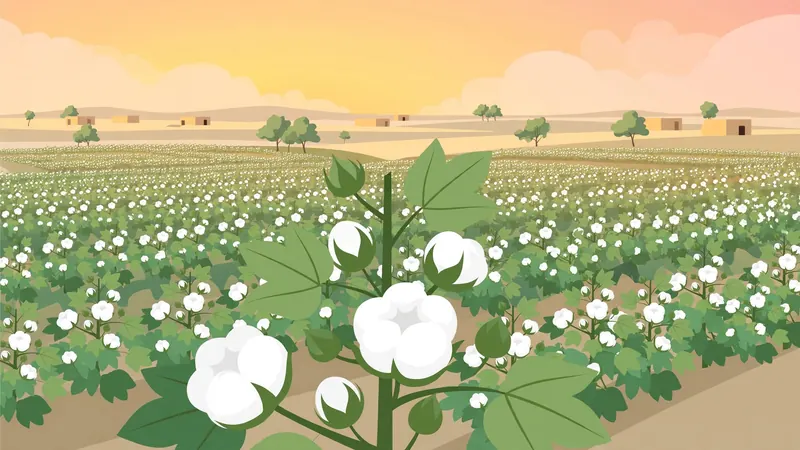
Cotton bollworms are caterpillars that bore into cotton bolls and eat the seed and lint from the inside, and two species do most of the damage in Pakistan: pink bollworm, the most destructive cotton pest in the country, and American bollworm, a hungry generalist that also attacks chickpea, tomato and maize. Telling them apart matters, because they damage the boll differently and they are scouted and controlled differently.
Which bollworms attack cotton in Pakistan?
Two bollworm species cause most of the boll damage on Pakistani cotton. Pink bollworm, Pectinophora gossypiella, is a small moth whose caterpillars feed inside the boll and are considered the most destructive cotton pest in the country. American bollworm, Helicoverpa armigera, is larger, feeds on squares, flowers and bolls, and also attacks chickpea, tomato, maize and sorghum.
Both are moth caterpillars, both hide inside the boll where sprays cannot easily reach them, and both are worst when the crop is fruiting. Spotted bollworm and armyworm also occur, but pink and American bollworm are the ones that decide whether the boll harvest pays.
How do I tell pink bollworm from American bollworm?
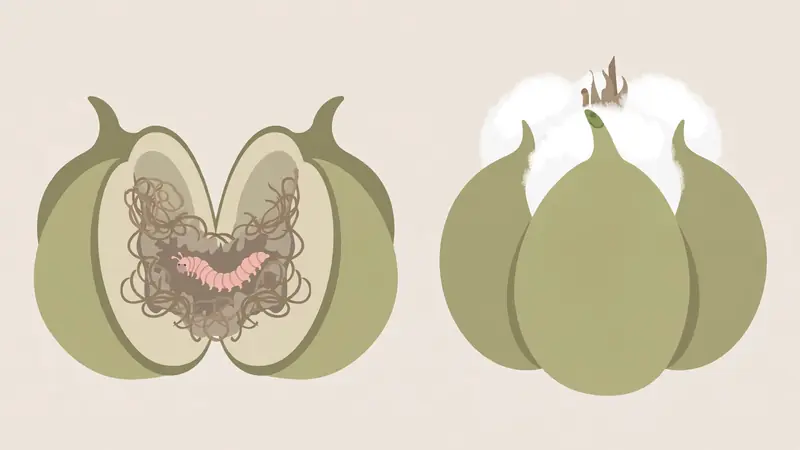
Pink bollworm damage shows first in the flowers: attacked flowers fail to open properly and look rosetted, with petals stuck together, and the caterpillar bores into the young boll and feeds on the seeds inside. Open a damaged boll and you find two seeds joined together, discoloured lint, and small caterpillars between the seeds, the entry hole plugged by droppings.
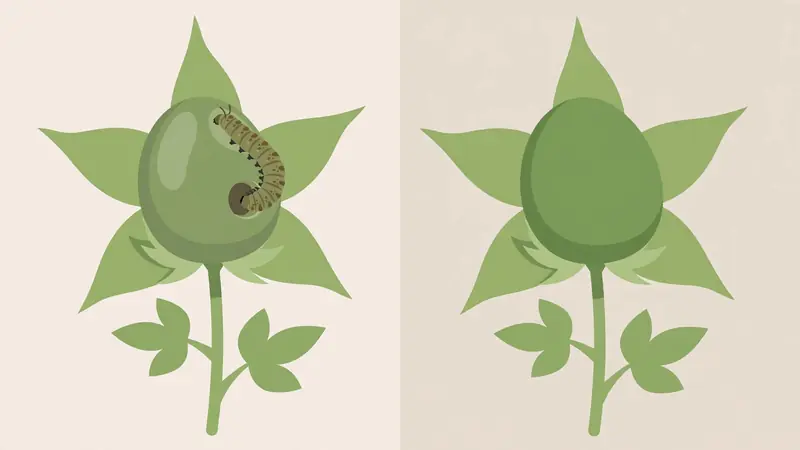
American bollworm is easier to see: the caterpillar is bigger and greener, it cuts a clean round bore hole in the boll and feeds with its head inside and its body outside, leaving granular droppings around the hole. A single American bollworm caterpillar can damage 30–40 bolls, so even a few caterpillars per plant are worth acting on.
| Feature | Pink bollworm | American bollworm |
|---|---|---|
| Scientific name | Pectinophora gossypiella | Helicoverpa armigera |
| First sign | Rosetted flowers that fail to open | Round bore holes in squares and bolls |
| Where it feeds | Inside the boll, on seeds | On squares, flowers and bolls, head inside |
| Damage to look for | Double seed, discoloured lint, plugged entry hole | Clean round hole, granular droppings outside it |
| Other hosts | Cotton, okra and wild mallows | Chickpea, tomato, maize, sorghum and many more |
| Action threshold | 5% of bolls damaged | 6 eggs or caterpillars per 25 plants, or 10% damage |
When should I scout for bollworms?
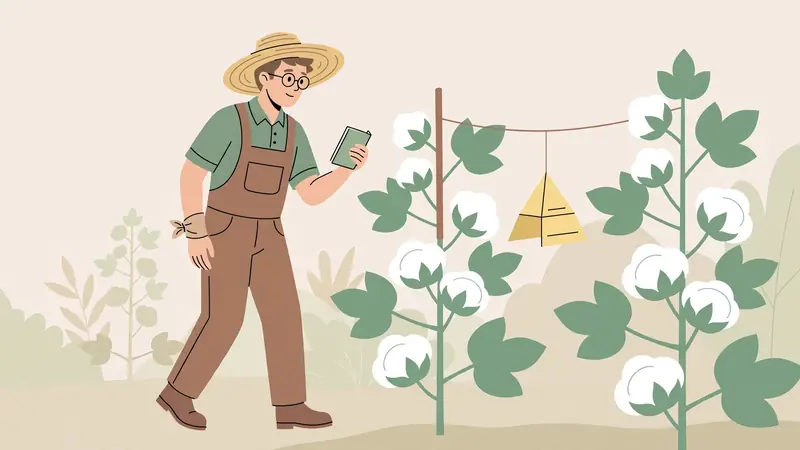
Scout from first flowering through boll opening, at least once a week, and twice a week when the crop is fruiting heavily. Walk the field in a zigzag, check 25 plants at random, and count rosetted flowers, bored bolls and caterpillars — the thresholds above are the decision points, not guesses.
Pink bollworm builds quietly because the caterpillar is hidden inside the boll, so a field can look fine from the road while the bolls are already damaged. Opening a few bolls every week is the only way to catch it before the damage is done.
Why is Bt cotton no longer enough against pink bollworm?
Pakistan has grown Bt cotton producing the Cry1Ac protein since 2010, and for years it kept pink bollworm down. But a 2020–2021 field assessment in Pakistan found that only one of ten Cry1Ac and Cry1Ac-plus-Cry2Ab varieties tested was significantly effective against pink bollworm, which suggests practical resistance has developed in the country.
The lesson is not that Bt cotton is useless — it still helps against American bollworm — but that relying on one protein alone no longer controls pink bollworm. Scouting, cultural control and biological control have to carry the weight again, and any variety claim should be checked against current local experience.
How do I control bollworms without spraying everything?
Bollworm control starts after harvest, not at flowering. Destroy off-season cotton sprouts and alternate host plants, deep-plough the field to bury affected bolls, and remove cotton sticks soon after the last picking so the pest has nowhere to spend the winter.
- Sow on time and finish early. Avoid late sowing, and stop irrigation in time so the crop does not keep producing late bolls that feed the overwintering population.
- Clean up after harvest. Deep ploughing exposes hibernating caterpillars and pupae; grazing sheep and goats on unwanted bolls after the last picking destroys many more.
- Keep risky neighbours away. Do not grow okra or moong right beside cotton, and remove alternate hosts around the field edge.
- Handpick early. Small caterpillars can be picked off by hand in the early stages of attack, before they bore into the boll where nothing can reach them.
- Use the natural enemies. The egg parasitoid Trichogramma chilonis destroys bollworm eggs, and the larval parasitoid Campoletis chloridae attacks American bollworm caterpillars — both are worth protecting by avoiding broad sprays when they are active.
- Spray only on threshold, and only the right chemistry. When scouting crosses the threshold, products with active ingredients such as spinosad, indoxacarb, emamectin benzoate or chlorantraniliprole are used against bollworms in Pakistani guidance. No doses are given here; check the current product label and local extension advice first.
What to do next
- Scout this week: 25 plants, count rosetted flowers, bored bolls and caterpillars, and open a few bolls to check the seed.
- Work through the damage on the symptom tool if you are unsure which bollworm you have.
- After the last picking, deep-plough and remove cotton sticks — next season's bollworm control starts there.
Identify the pest from the damage
Describe what you see — bore holes, rosetted flowers, damaged bolls — and work through the likely pest step by step before you decide to spray.
Advisory note
This article is advisory guidance, not a definitive diagnosis. A photo-based check can narrow down the likely disease, but only laboratory confirmation or an extension officer's field visit gives a certain diagnosis. Never spray on the basis of a blog post alone — check the current product label and your local agriculture department advice first. No pesticide doses are given in this article.
By Ghulam Mustafa — Final-year BSc (Hons.) Agriculture student, specialising in Plant Pathology, The Islamia University of Bahawalpur (IUB), Pakistan. CGPA 3.98/4.00.
Frequently asked questions
What is the difference between pink and American bollworm?
Pink bollworm is a small caterpillar that feeds inside the boll on the seeds, shows first as rosetted flowers, and is judged against a 5% boll-damage threshold. American bollworm is larger, cuts a clean round hole in the boll, feeds with its head inside, and is judged against 6 eggs or caterpillars per 25 plants or 10% damage.
Can bollworms be controlled without chemicals?
Partly, yes. Timely sowing, deep ploughing, destroying crop residue and sticks, handpicking early caterpillars, and protecting parasitoids such as Trichogramma all reduce bollworm pressure. But a heavy attack past the threshold usually still needs a spray, so cultural control lowers the number of sprays rather than replacing them entirely.
Does Bt cotton control American bollworm too?
Bt cotton still helps against American bollworm, which is more sensitive to the Cry proteins than pink bollworm is. The resistance problem found in Pakistani field trials concerns pink bollworm specifically. Even so, Bt cotton is one tool among several, not a reason to stop scouting.
Why do my cotton bolls fall off before opening?
Bolls can drop for many reasons, including water stress and nutrient problems, but bored, damaged bolls fall early too. Open fallen bolls and look for caterpillars, double seed or bore holes. If the inside is clean, the cause is more likely water or nutrition than bollworm.
Sources
- Field assessment of the effects of Cry1Ac and Cry1Ac + Cry2Ab Bt cotton against pink bollworm in Pakistan (Springer, 2025) — consulted 2026-11-17
- Chewing pests of cotton — pink and American bollworm identification, damage and control (SlideShare) — consulted 2026-11-17
- Management of Helicoverpa armigera with different insecticides (ResearchGate) — consulted 2026-11-17
Curl returns 403 (bot protection); trial findings verified via search on 2026-11-17.
Continue: Work through the symptoms step by step · Analyse a photo of the damage · Plan a rotation that breaks pest cycles · Chilli leaf curl — another whitefly-linked problem · Okra yellow vein mosaic virus