Early Blight vs Late Blight in Tomatoes: Symptoms and Diagnosis
Published 2026-11-18
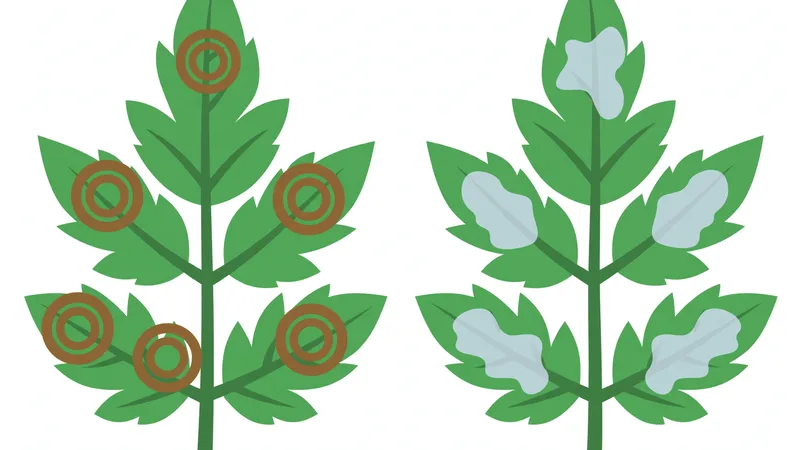
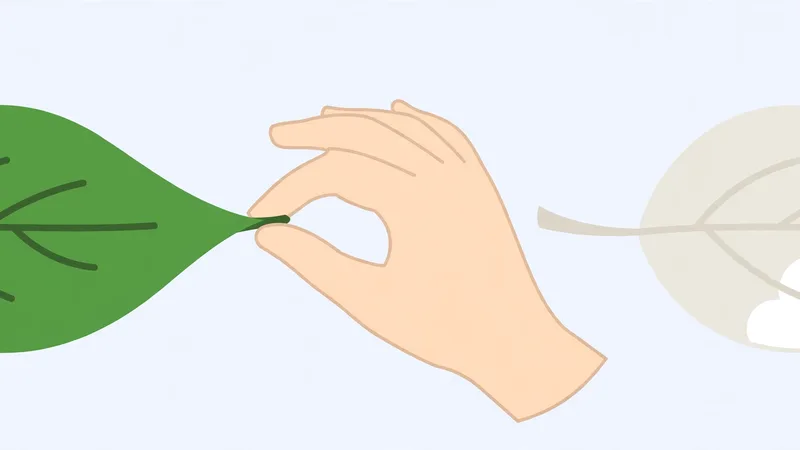
Early blight and late blight in tomatoes are two different diseases that need different responses. Early blight, caused by the fungus Alternaria solani, makes round brown spots with concentric rings like a target, starts on the oldest lower leaves in warm, humid weather, and climbs the plant over weeks. Late blight, caused by the oomycete Phytophthora infestans, makes large irregular water-soaked lesions in cool, wet weather, shows white fuzzy mould on the leaf underside, and can destroy a planting in days. Flip the leaf: rings mean early blight, water-soaked lesions with white mould underneath mean late blight — and late blight is the one that cannot wait.
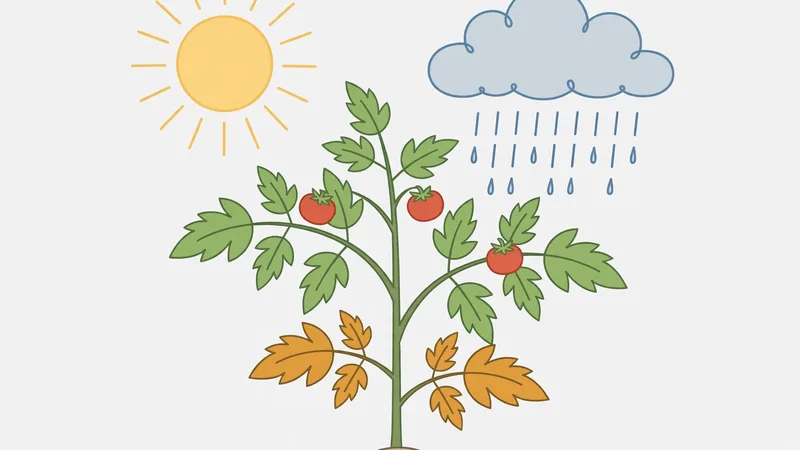
Early blight vs late blight: the one-minute distinction
Two different organisms — why the distinction changes everything
The names sound like a pair, but the organisms are not close relatives. Early blight is caused by Alternaria solani, a true fungus. Late blight is caused by Phytophthora infestans, an oomycete — a water mould, more closely related to algae than to true fungi. That matters because fungicides are grouped by the organism they attack: many products that control true fungi have little or no activity against oomycetes, and oomycete-specific products are wasted on early blight. Getting the diagnosis wrong therefore wastes money twice — the wrong spray, and the crop lost while the right one was not applied. The two also survive differently. Late blight survives only on living tissue, according to Cornell's late blight factsheet, so it does not overwinter in dead debris the way early blight does; it arrives on wind-blown spores from infected plants or tubers, or on infected transplants. Early blight survives in infected debris and soil and on seed, so it returns to the same ground year after year unless debris is cleared and crops are rotated.
Early blight in detail
Early blight begins on the oldest, lowest leaves as small brown spots that enlarge to roughly 6–12 mm across and develop dark concentric rings — a target-board or bull's-eye pattern — with yellow tissue around each lesion. Affected leaves turn yellow, wither and drop, and the disease climbs the plant leaf by leaf. Dark, target-like cankers can appear on stems, and fruit develops dark, leathery, sunken lesions at the stem end with the same rings. The disease favours warm, humid conditions with wet leaves, and it progresses over days to weeks rather than hours. It is the common, near-annual tomato leaf spot in most regions: manageable by removing infected lower leaves, improving airflow, watering at the base, and protecting healthy foliage. It rarely kills a plant outright in a week; its damage is defoliation from the bottom up, which exposes fruit to sunscald and shortens the harvest. The name "early" is misleading — it distinguishes the disease from late blight, not the time of season it appears, and it can strike from seedling to harvest.
Late blight in detail
Late blight is the emergency. Cornell's factsheet records that black lesions appear within 3–7 days of infection of leaves, after periods of wet weather, and that under humid conditions delicate whitish growth — the pathogen's spores — appears on the lesion, especially on the underside. On tomato, leaf and stem symptoms resemble those on potato: large, irregular, water-soaked, greasy-looking lesions with pale green to olive borders, dark firm stem lesions that can girdle and kill stems fast, and firm, dark, greasy fruit lesions from which spore structures emerge in humidity. It thrives in cool, wet weather, roughly 60–70 °F, and spreads explosively when leaves stay wet. Cornell's VegEdge newsletter (July 2025) gives the speed in the field: in one observed field, a susceptible tomato variety reached 100% of plants infected and 30% of the canopy dead within 10 days of infection, and effective fungicide applied two days after the first symptoms still failed to regain control in rainy weather. The same report notes that once 5% of plants show any signs, the odds of regaining control drop rapidly. That is why late blight is a same-day problem: photograph it, isolate the plants, stop walking through wet foliage, and get a diagnosis confirmed the same day.
Side-by-side comparison
| Feature | Early blight (Alternaria solani) | Late blight (Phytophthora infestans) |
|---|---|---|
| Organism | True fungus | Oomycete (water mould) |
| Spot pattern | Round brown spots with concentric rings (target) | Large irregular water-soaked, greasy lesions, no rings |
| Spot size | 6–12 mm, enlarging slowly | Expands fast, several cm in days |
| Where it starts | Oldest lower leaves | Any leaves, often after rain; whole plant fast |
| Yellow halo | Yes, around lesions | Pale green to yellow margin on water-soaked tissue |
| Underside of leaf | No diagnostic sign | White fuzzy mould in humid conditions |
| Stem lesions | Dark sunken cankers | Dark firm lesions, can girdle stems |
| Fruit | Dry leathery sunken lesion at stem end | Firm brown greasy rot, often whole fruit |
| Weather it loves | Warm and humid | Cool and wet (about 60–70 °F) |
| Speed | Days to weeks, climbing upward | Days — can destroy a plant in a week |
| Survival | Debris, soil, seed | Living tissue only |
The flip-the-leaf test
If you do only one test, do this. Pick a fresh lesion in the morning, when humidity is highest, and turn the leaf over. White, cottony, fuzzy growth on the underside of a water-soaked lesion is the diagnostic sign of late blight — no other common tomato disease produces it. No white growth and a clear ring pattern means early blight is the working diagnosis. Do the test on several leaves, not one, and photograph both surfaces with a coin for scale. Two cautions: white mould may be absent on a dry afternoon, so a negative test in dry weather does not rule late blight out; and if the weather has been cool and wet and lesions are spreading fast, treat it as late blight until proven otherwise and act the same day. A photo check on PhytoAssist or TomatoTriage can support the call, but for suspected late blight, contact your local extension office the same day — regional alerts (such as USABlight in the United States) track outbreaks, and your report helps neighbouring growers too.
Look-alikes: Septoria leaf spot
Septoria leaf spot is the third disease most often confused with the blights. It makes many tiny spots — 1.5–3 mm — with grey centres and dark borders, no rings, starting on lower leaves in cool, wet weather, with tiny black dots (fruiting bodies) visible inside the spots under a hand lens. It rarely attacks fruit. The rule of thumb: rings mean early blight, water-soaked speed means late blight, tiny grey-centred spots mean Septoria. If you see all three patterns on one plant, you may have more than one disease — that is common late in the season, and it is another reason to get a lab confirmation rather than spraying for a single cause.
What to do for each disease
For early blight, act the same day you confirm the ring pattern: remove spotted lower leaves into a bag and destroy them away from the crop, improve airflow by staking and spacing, water at the base in the morning, mulch to stop soil splash, and protect healthy foliage. For late blight, act faster and more drastically: do not wait to see whether it spreads, because it will. Remove and destroy badly infected plants, avoid moving through wet plants, and consult your state extension guidance immediately for products labelled for tomato late blight in your area — fungicides must be applied preventively or at the very first sign, and they cannot cure lesions that already exist. In both cases, check the current product label for the crop and your state, and rotate fungicide groups by FRAC code rather than repeating the same mode of action; the FRAC guide in this series explains how. Resistant varieties are the cheapest long-term control for both diseases — ask your seed supplier which current varieties carry resistance, and treat any variety claim as a starting point, not a guarantee.
What to do next
Walk the tomato crop today and flip five leaves. Rings on the lower leaves in warm weather point to early blight; water-soaked lesions with white mould underneath after cool, wet weather point to late blight — act the same day. Photograph both leaf surfaces and the whole plant, run the photo through PhytoAssist or TomatoTriage, and if late blight is suspected, call your local extension office the same day.
Check a spotted tomato leaf
Answer six quick questions about the spots and get a likely match with next steps — then compare the result with the ring pattern in this article.
Advisory note
This article is advisory guidance, not a definitive diagnosis. A photo-based check can narrow down the likely disease, but only laboratory confirmation or an extension officer's field visit gives a certain diagnosis. Never spray on the basis of a blog post alone — check the current product label and your local agriculture department advice first. No pesticide doses are given in this article.
By Ghulam Mustafa — Final-year BSc (Hons.) Agriculture student, specialising in Plant Pathology, The Islamia University of Bahawalpur (IUB), Pakistan. CGPA 3.98/4.00.
Frequently asked questions
Is early blight the same as late blight?
No. Early blight is caused by the fungus Alternaria solani and shows concentric-ring spots starting on lower leaves in warm, humid weather. Late blight is caused by the oomycete Phytophthora infestans, shows fast-spreading water-soaked lesions in cool, wet weather, and can destroy a plant within days.
How can I tell late blight from early blight quickly?
Flip the leaf in the morning. White fuzzy mould on the underside of a water-soaked lesion means late blight. Round brown spots with concentric rings and a yellow halo, with no mould underneath, mean early blight. Cool, wet nights favour late blight; warm, dry days favour early blight.
Can tomato plants recover from late blight?
Rarely once it is established across the plant. Late blight moves too fast, and fungicides cannot cure existing lesions. The best outcome is early detection on a few leaves, immediate removal, and protection of the remaining healthy foliage — and even then, control often fails in continued wet weather.
Does early blight spread to potatoes?
Yes. Alternaria solani attacks tomato and potato (and can affect brinjal/eggplant). Rotate away from all solanaceous crops — tomato, potato, brinjal and chilli — to break the cycle. The fungus also survives in infected debris and soil, so clearing debris and rotating away from solanaceous crops both help break the cycle.
Should I spray the whole plant or just the sick leaves?
Remove sick leaves first, then protect the healthy foliage that remains. Spraying spotted leaves will not heal them. Any spray decision needs the current product label and local extension advice before you buy or apply anything. Focus on protecting new growth, and re-check the label each season because products and recommendations change.
Sources
- Cornell University — Late Blight, A Serious Disease of Potatoes and Tomatoes (NYS IPM Publication No. 140) — consulted 2026-11-18
- Cornell Vegetables — Disease factsheets and articles — consulted 2026-11-18
- Cornell Vegetables — General tips on identifying plant diseases — consulted 2026-11-18
- Cornell Cooperative Extension — VegEdge Vol. 21, Iss. 14 (23 July 2025), late blight confirmed in western NY — consulted 2026-11-18
Continue: How to diagnose plant diseases from leaf symptoms · How to collect and submit plant samples for accurate diagnosis · Tomato early blight — rings, not water-soaking