How to Diagnose Plant Diseases From Leaf Symptoms: A Step-by-Step Guide
Published 2026-11-18
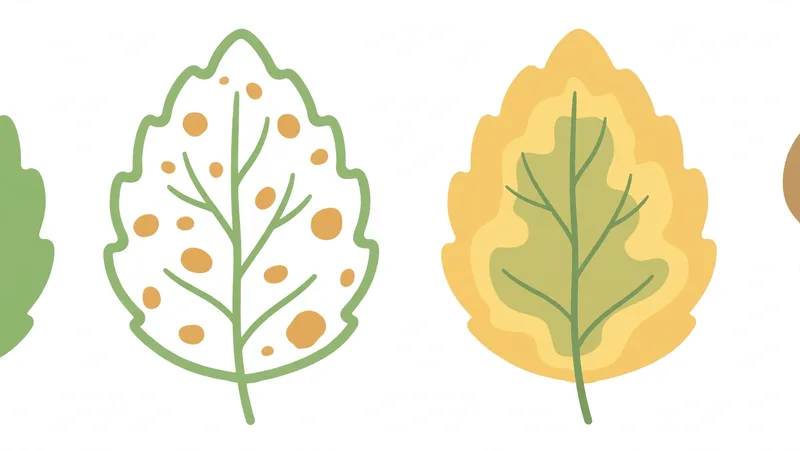
Diagnosing a plant disease from leaf symptoms takes six steps: identify the host plant and what healthy looks like, step back and read the pattern across the planting, examine the leaf closely on both surfaces, check stems, roots and fruit, look for signs of the pathogen itself, and record the weather, timing and history before naming a shortlist of likely causes. A single photo of one leaf is rarely enough — the pattern, the plant part and the conditions around it are what separate one disease from another.
How do I diagnose a plant disease from its leaves?
Symptoms vs signs: the distinction that decides everything
Symptoms are the plant's reaction to a problem: spots, yellowing, wilting, curling, stunting. Signs are the pathogen itself or something it produces that you can see: fuzzy mould, powdery growth, ooze, fruiting bodies, spores. University of Delaware Extension puts it plainly — a symptom is the alteration of the plant, a sign is the pathogen or pest itself observed on the host. The distinction matters because a sign can confirm a diagnosis while a symptom alone usually cannot. Yellow leaves, for example, can mean a virus, a nutrient problem, waterlogging, cold damage or root rot. White fuzzy growth on the underside of a water-soaked leaf, on the other hand, points directly at late blight. When you find a sign, you have evidence. When you only have symptoms, you have a shortlist. A hand lens (10× is enough for most field checks) is the cheapest diagnostic tool a grower owns, because many signs are too small to see with the naked eye. Cornell's vegetable pathology guidance adds a useful trick: check for signs early in the morning, because some pathogens produce spores overnight and the spores are dispersed by wind during the day.
Step 1 — Identify the host and know what is normal
Start by naming the plant — species and, if you know it, the variety. Knowing the host eliminates most diseases at once, because most pathogens attack only a narrow range of hosts. Then ask what healthy looks like for that plant. The University of Illinois Extension's diagnostic steps begin here for a reason: variegated leaves can be mistaken for a virus, a dwarf variety can look stunted, and drooping foliage can be normal for some species. If you do not know the normal growth habit, you cannot recognise the abnormal. Note the variety name, the planting date, and whether neighbouring plants of the same variety look the same. If every plant of one variety is affected and another variety beside it is clean, that is itself a clue — it points toward a variety-specific susceptibility rather than a spray or weather event, which would usually hit everything.
Step 2 — Step back and read the pattern
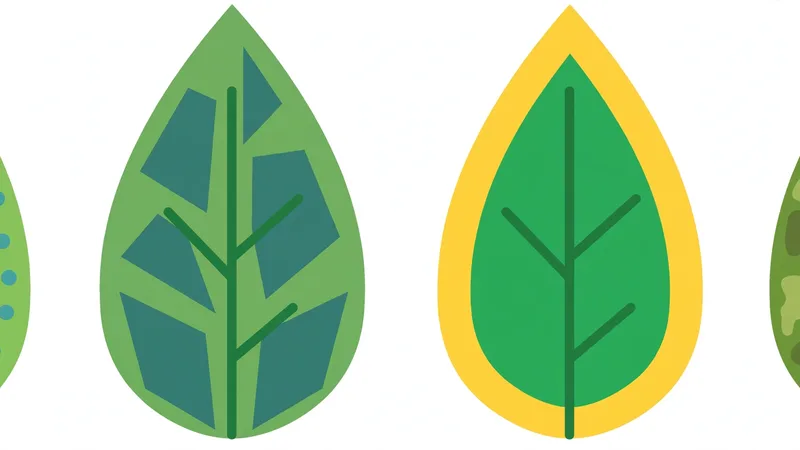
Before touching a leaf, stand back and look at the whole planting, then at individual plants, then at individual leaves. The pattern of injury is one of the strongest diagnostic clues there is. A uniform pattern — for example, browning of leaf margins on most leaves of most plants — most often points to an abiotic, non-infectious cause such as drought, salt, cold or a nutrient problem. A random pattern — scattered plants, scattered leaves, one branch here and one leaf there — usually points to a biotic cause such as an infectious disease or an insect. Also note which leaves are affected first. Cornell's guidance stresses this: are symptoms mostly on old leaves, young leaves, or evenly spread? Old leaves are hit first when spores splash up from the soil, when lower leaves stay wet longest, or when the pathogen prefers older tissue. Young growth first suggests a virus, a systemic problem or a nutrient issue. Note whether symptoms are spreading over days (progressive, typical of a pathogen) or appeared all at once after a single event such as a frost, a spray or a hot day (one-time injury). Most plant pathogens are polycyclic — they produce a new generation of spores within days to about a week — so a disease that is visibly spreading is behaving like a pathogen, while damage that is frozen in time is usually not.
Step 3 — Examine the leaf closely, both sides
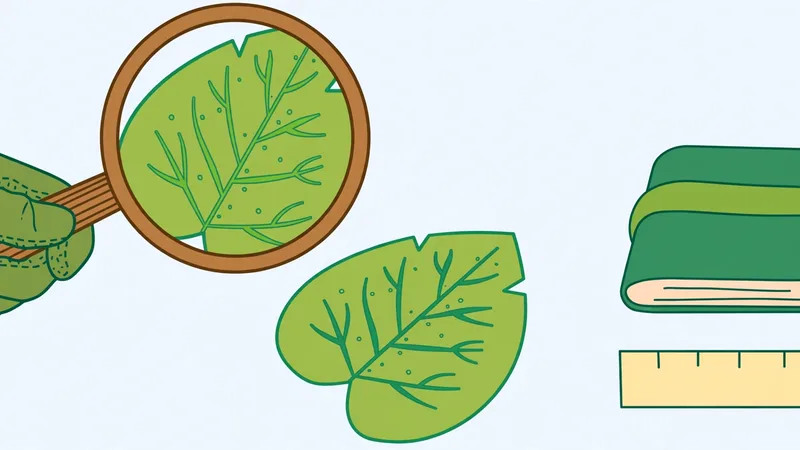
Now pick up the leaf. Look at the top surface and the underside, young leaves and old leaves, and describe what you see in plain words: spot shape, spot size, colour, margin, and whether the spots are bounded by veins. Shape matters more than colour. Round spots with concentric rings suggest Alternaria (early blight). Angular spots that stop at the leaf veins suggest a downy mildew, because the pathogen cannot easily cross a major vein. Tiny spots with grey centres and dark borders suggest Septoria. A yellow halo around a spot is typical of early blight; a sharp border between dead and healthy tissue is more typical of injury than of infection. Always flip the leaf: powdery mildew shows its white powder on the upper surface, but downy mildew shows its grey-purple fuzz on the underside, and late blight shows its white mould on the underside in humid weather. Note where the spots sit — leaf margins, between veins, along the midrib — and whether leaves are curling, puckering or showing a mosaic of light and dark green. Photograph the leaf top and underside with a coin for scale, and photograph the whole plant too; Cornell advises documenting symptoms with photos, because a diagnostician needs the pattern, not just the spot.
Step 4 — Check the stems, roots and fruit
Leaf symptoms are often the echo of damage somewhere else. If plants are stunted or wilting, look at the roots and cut open the stems — Cornell's guidance is explicit that the location and extent of stem discoloration can be decisive. A brown ring in the water-conducting tissue of a cut stem points to a vascular wilt such as Fusarium or Verticillium. Soft, brown, rotting roots on a plant that is wilting in wet soil point to Phytophthora root rot. Check fruit as well: the position of a lesion on fruit matters — early blight rots the stem end of a tomato, late blight makes firm greasy lesions anywhere on the fruit. If the leaves look sick but the roots are white and firm and the stem is clean inside, the problem is more likely foliar, nutritional or environmental than a root or vascular disease. Do this check before you spray anything: a foliar spray cannot fix a root problem.
Step 5 — Look for signs, and try the overnight test
With the pattern and the symptoms recorded, hunt for signs. Use the hand lens on the underside of fresh spots, on leaf margins and on stem lesions. Look for powdery or fuzzy growth, tiny black dots inside spots, ooze, or mould. Check early in the morning, when overnight sporulation is fresh. If you cannot see signs, Cornell describes a simple induction test: place affected tissue in a closed plastic bag on a damp paper towel for 12 to 24 hours, ideally in the dark. Some pathogens will sporulate under those conditions and reveal themselves. This test is for observation only — keep the bag sealed and dispose of the tissue afterwards, away from the crop. If signs appear, photograph them through the lens if you can. If no signs appear, that is also information: it makes a bacterial or viral cause, or an abiotic cause, relatively more likely, and it is a good reason to involve a diagnostic lab rather than guessing.
Step 6 — Record the conditions and name a shortlist, not a verdict
Diagnosis is hypothesis testing. Write down the facts that constrain the answer: host and variety, which plant parts are affected, the pattern across the planting, the weather of the last one to two weeks (rain, temperature, leaf wetness, humidity), irrigation method, recent sprays, fertiliser, and whether the problem is spreading. Then consult a reference organised by host — extension factsheets, a diagnostic key, or your local extension specialist — and build a shortlist of two or three likely causes with the evidence for and against each. Do not settle on the first match. If the shortlist includes a fast-moving disease such as late blight, act on the precautionary side the same day: isolate the plants, stop moving through the crop when foliage is wet, and photograph everything. If the cause is still unclear, or the stakes are high (a commercial crop, a spreading problem), send a sample to a diagnostic clinic — the sample guide in this series explains exactly how to collect and ship it. A photo-based check on PhytoAssist can narrow the shortlist in minutes, but treat any photo result as a likely match, not a laboratory diagnosis.
Common traps that cause misdiagnosis
The most common trap is diagnosing from yellow leaves alone. Yellowing is a symptom of dozens of causes, and spraying a fungicide for a nutrient problem wastes money and chemistry. The second trap is diagnosing from a single close-up photo with no context: no whole-plant view, no pattern, no weather, no host variety. The third is assuming this year's problem is the same as last year's because it looks similar — similar spots can have different causes, and the same pathogen can look different in different weather. The fourth is treating before identifying. Removing infected leaves, improving airflow and watering at the base are safe first moves for most leaf diseases; spraying a fungicide before you know the pathogen is not. And the fifth is ignoring the roots: a plant wilting in wet soil is telling you to dig, not to water more.
What to do next
Walk the crop today with a hand lens and a notebook. Record the host, the pattern, the spot shapes on both leaf surfaces, and the weather of the last two weeks. Build a shortlist of two or three causes, check it against the comparison guides for blights, mildews and wilts in this series, and run a photo check on PhytoAssist for a second opinion. If the problem is spreading fast, or the shortlist includes late blight or a vascular wilt, collect a sample and contact your local extension office the same day.
Check a spotted leaf
Answer a few questions about the spots and get a likely match with next steps — then compare the result with the patterns in this guide.
Advisory note
This article is advisory guidance, not a definitive diagnosis. A photo-based check can narrow down the likely disease, but only laboratory confirmation or an extension officer's field visit gives a certain diagnosis. Never spray on the basis of a blog post alone — check the current product label and your local agriculture department advice first. No pesticide doses are given in this article.
By Ghulam Mustafa — Final-year BSc (Hons.) Agriculture student, specialising in Plant Pathology, The Islamia University of Bahawalpur (IUB), Pakistan. CGPA 3.98/4.00.
Frequently asked questions
What is the difference between a symptom and a sign?
A symptom is the plant's reaction, such as spots, yellowing or wilting. A sign is the pathogen itself or something it produces, such as fuzzy mould, powdery growth or spores. Signs can confirm a diagnosis; symptoms alone usually give only a shortlist of possible causes.
Why should I look at both sides of a leaf?
Because several diseases show their diagnostic feature only on the underside. Downy mildew produces grey-purple fuzz underneath, and late blight produces white mould on the underside in humid weather, while the upper surface may show only yellow patches or water-soaked spots.
Can I diagnose a plant disease from one photo?
Rarely with certainty. One close-up photo shows the spot but not the pattern across the planting, the host variety, the roots, or the weather. A photo check is a useful first opinion; a confident diagnosis needs the whole-plant pattern, both leaf surfaces, and often a lab test.
What should I do first when I find leaf spots?
Record the pattern and photograph the leaf top and underside plus the whole plant, check stems and roots if plants are wilting, and look for signs with a hand lens in the early morning. Remove badly spotted leaves, avoid wetting foliage, and do not spray until you have a likely cause.
When should I send a sample to a diagnostic lab?
When the cause is unclear after the six steps, when the problem is spreading fast, when the crop is commercially valuable, or when the shortlist includes a disease that needs lab confirmation, such as a vascular wilt or a virus. The sample guide in this series explains how to collect, pack and ship it.
Sources
- Cornell Vegetables — General tips on identifying plant diseases — consulted 2026-11-18
- University of Illinois Extension — Steps in Diagnosing a Plant Problem — consulted 2026-11-18
- University of Delaware Cooperative Extension — Diagnosing Horticultural Plant Problems — consulted 2026-11-18
- Cornell / Albany County — Plant Diagnostics — consulted 2026-11-18
- Dutky & Ruhl — Diagnosis of Plant Problems (University of Maryland / Purdue) — consulted 2026-11-18
Continue: How to collect and submit plant samples for accurate diagnosis · Can AI identify plant diseases from photos? · Early blight vs late blight in tomatoes