Can AI Identify Plant Diseases From Photos? Accuracy, Limitations and Best Practices
Published 2026-11-18
Yes — as a fast first opinion, not as a final diagnosis. A trained AI model can name a likely disease from a photo of a leaf, and in controlled laboratory tests the best-known models score above 99% accuracy. But those scores were measured on clean, standardised photos, and when the same model was tested on photos taken in other conditions, accuracy fell to about 31%. A field trial of a cassava disease app gave a more realistic number — 65% correct, rising to 74–88% when users checked six leaves per plant. So the honest answer is: AI photo identification is a useful scouting tool that narrows the shortlist in minutes, and it is not a laboratory diagnosis. Use it to decide what to look at next, cross-check it against the symptoms yourself, and confirm by lab test when the stakes are high — a commercial crop, a spreading problem, or a spray decision that costs real money.
Can AI identify plant diseases from photos? The honest answer
How photo AI works, in one paragraph
A photo-identification model is a pattern-matching system trained on thousands of labelled leaf photos. Researchers show it many images of, say, tomato early blight, tomato late blight and healthy tomato leaves, and the model learns the visual patterns that separate them — spot shape, colour, texture, distribution. When you upload a new photo, it compares the patterns in your image with what it learned and returns the closest matches, usually with a confidence score. The best-known demonstration is the 2016 PlantVillage study by Mohanty, Hughes and Salathé, which trained a deep-learning model on 54,306 leaf images covering 14 crop species and 26 diseases (38 classes including healthy leaves). The model is only as good as its training images: if it was trained on clean photos of one leaf on a plain background, it will be best at clean photos of one leaf on a plain background, and worse at everything else.
The numbers, honestly: the 99% / 31% gap
The headline number is real, and so is the gap. Mohanty, Hughes and Salathé (2016) reported 99.35% accuracy on a held-out test set drawn from the same PlantVillage image collection — photos taken under controlled conditions, one leaf face-up on a plain background. On two small sets of images from other sources, about 120 images each, the same model scored 31.4% and 31.7%. That is still far better than random guessing among 38 classes (2.6%), and the correct answer was in the model's top five guesses about 53–66% of the time — but it is not good enough to act on alone. The gap exists because field photos are different: shadows, complex backgrounds, changes in light, different camera distances, multiple leaves, and leaves photographed at an angle. A 2026 review of the field emphasised exactly this: controlled benchmark images are not equivalent to field photographs, and a 2026 cross-domain study reported a sharp drop in accuracy when a model trained on PlantVillage was tested on PlantDoc — a dataset of 2,598 field images — while the model's confidence stayed high. That last point matters: a high confidence score does not mean the answer is right when the photo is unlike the training images.
What field trials actually show
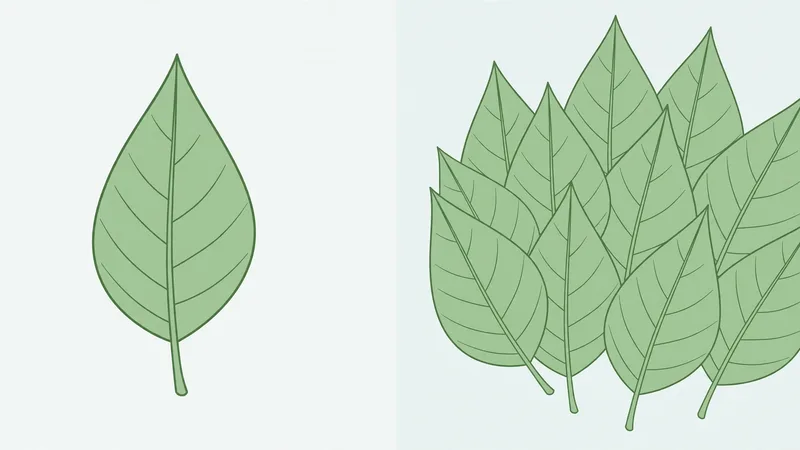
Laboratory scores are not the only evidence, and field trials give a fairer picture. A team at the International Institute of Tropical Agriculture tested the PlantVillage Nuru app on cassava virus diseases and green mite damage in the field (Mrisho et al., 2020). The app identified disease symptoms with 65% accuracy, compared with 40–58% for extension agents and 18–31% for farmers — so the app beat the humans, but it was still wrong about a third of the time. When users checked six leaves per plant, the app's accuracy rose to 74–88%. Three lessons follow. First, lab scores overstate field results — ask how a tool was tested, not just for its headline accuracy. Second, more photos help: scanning several leaves per plant, and several plants per patch, raises accuracy measurably. Third, a photo cannot show what is not visible: a hidden infection that has not yet caused symptoms on the photographed leaf is invisible to any camera, and many causes — fungus, bacterium, virus, nutrient problem, herbicide drift — look alike on a leaf.
What makes a photo hard for AI
The same things that make a photo hard for a human diagnostician make it hard for AI, plus a few that are specific to models. A busy background (soil, other leaves, a hand, a fence) gives the model patterns it was not trained on. Harsh shadows and glare hide the spot's true colour and shape. A photo taken from too far away makes the spots too small to read; a photo taken too close crops out the pattern across the leaf. Multiple diseases on one leaf, or a leaf that is both diseased and nutrient-deficient, confuse a model trained to pick one label. Early symptoms — a few small spots — are harder than advanced ones. And a model can only name diseases it was trained on: a disease outside its training set will still get an answer, because the model always picks the closest match it knows, even when the right answer is not among its options. That is why an AI result should always be treated as a shortlist, and why a "high confidence" result on an unusual symptom deserves more suspicion, not less.
How to take photos that help: the checklist
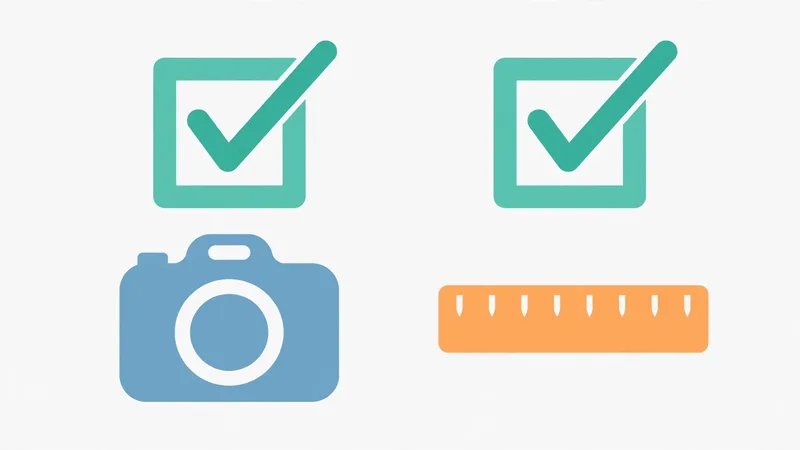
Good photos are the cheapest way to improve an AI result, and the rules are the same ones a diagnostic lab asks for. Photograph the whole plant first, so the pattern is visible. Then photograph the affected leaf from above and from below — several diseases show their diagnostic feature only on the underside. Take a close-up of a fresh lesion with a coin for scale, in soft daylight, without flash glare, and with the leaf filling the frame against a plain background if you can. Photograph several leaves per plant and several plants per patch — the cassava trial showed six leaves per plant is markedly better than one. Include leaves at different stages of the symptom, from early to advanced. Avoid shadows across the leaf, avoid wet leaves glistening in the sun, and do not photograph through plastic. Note the host, the variety, the weather of the last two weeks and where in the planting the problem is worst, and keep those notes with the photos — the AI may not use them, but you and the diagnostician will.
How to use a result well
Treat the result as a hypothesis, not a verdict. Read the top suggestion and the next two, then check them yourself against the diagnosis guide in this series: does the spot shape, the leaf it starts on, the pattern across the planting and the recent weather match? If the AI says early blight and the spots have concentric rings on the lower leaves after warm, humid weather, the hypothesis is strengthening. If the AI says one thing and the pattern says another, trust the pattern and get a second opinion. Never spray on the basis of a photo result alone — check the current product label and your local extension advice first, and confirm by laboratory test when the crop is valuable, the problem is spreading, or the shortlist includes a disease that needs lab confirmation, such as a vascular wilt or a virus. Keep a record of what the AI said and what the lab said; that is how you learn whether a particular tool is reliable on your crops, in your conditions.
How to judge an app before trusting it
Apps vary enormously. A 2022 review searched three app stores, found 606 plant apps, and rated 17 of them in detail (Siddiqua et al., 2022): most scored acceptably on design and speed but poorly on their AI functions, and the authors found only one app that could identify the plant, detect the disease, keep a plant database and suggest treatments. Apps change quickly, so test any app yourself on plants where you already know the answer — a healthy leaf, a known disease — before trusting it on an unknown one. Ask how the tool was tested: on lab photos or field photos, on how many images, on which crops, and with what accuracy on photos like yours. Check when it was last updated, and whether it states its limits plainly. A tool that publishes its test method and its limits is more trustworthy than one that publishes only a headline accuracy number. And remember that a photo tool answers one question — what is wrong with this leaf? — while a good diagnosis also needs the pattern, the history and, often, the lab.
What to do next
Photograph the problem today using the checklist above: whole plant, leaf top and underside, close-up with a coin for scale, several leaves per plant. Run the photos through PhytoAssist's photo check, read the shortlist, and cross-check it against the diagnosis guide and the comparison articles for blights, mildews and wilts. If the problem is spreading or the stakes are high, collect a sample and send it to your local diagnostic clinic — the sample guide in this series explains how.
Try a photo check
Photograph the leaf top and underside, several leaves per plant, and see what PhytoAssist suggests — then confirm it with the steps in this article.
Advisory note
This article is advisory guidance, not a definitive diagnosis. A photo-based check can narrow down the likely disease, but only laboratory confirmation or an extension officer's field visit gives a certain diagnosis. Never spray on the basis of a blog post alone — check the current product label and your local agriculture department advice first. No pesticide doses are given in this article.
By Ghulam Mustafa — Final-year BSc (Hons.) Agriculture student, specialising in Plant Pathology, The Islamia University of Bahawalpur (IUB), Pakistan. CGPA 3.98/4.00.
Frequently asked questions
How accurate is AI plant disease detection?
It depends on the photos. The best-known model scored 99.35% on lab photos but about 31% on photos from other sources (Mohanty et al., 2016). A cassava app trial scored 65%, rising to 74–88% with six leaves per plant (Mrisho et al., 2020). Treat any headline accuracy as a lab number until it is tested on field photos like yours.
Can an AI app replace a lab diagnosis?
No. A photo can only show visible symptoms, many causes look alike, and a model can only name diseases it was trained on. A lab test is still needed for certainty, especially for wilts, viruses and high-value crops. A photo cannot show roots, vessels or spores clearly enough, and many diseases share the same leaf symptoms.
Why is my AI result confident but wrong?
Because confidence measures how closely your photo matches the model's training images, not whether the diagnosis is right. A 2026 cross-domain study found accuracy dropped sharply on field photos while confidence stayed high. An unusual symptom on an unfamiliar background can produce a confident wrong answer.
How many photos should I take?
Several leaves per plant and several plants per patch. The cassava field trial showed accuracy rising from 65% to 74–88% when six leaves per plant were checked instead of one. One leaf can mislead, but a set of leaves across the patch shows the pattern the model needs.
What photos help AI most?
A whole-plant shot, the leaf top and underside, a close-up of a fresh lesion with a coin for scale, in soft daylight without glare, with the leaf filling the frame — plus notes on host, variety, weather and pattern. Without those notes the model sees spots but not the context that separates one disease from another.
Sources
- Mohanty, Hughes & Salathé (2016), Frontiers in Plant Science — PlantVillage deep-learning study (54,306 images; 99.35% held-out; 31.4% / 31.7% on outside image sets) — consulted 2026-11-18
- Mrisho et al. (2020), Frontiers in Plant Science — PlantVillage Nuru cassava field test (65%; 74–88% with six leaves per plant) — consulted 2026-11-18
- AI-Based Crop Disease Detection from Leaf Images: A Focused Review and Robust Evaluation Framework (Preprints.org, 2026 — preprint, not peer-reviewed) — consulted 2026-11-18
- Cornell Vegetables — General tips on identifying plant diseases — consulted 2026-11-18
- Siddiqua et al. (2022), Agronomy — Evaluating Plant Disease Detection Mobile Applications: Quality and Limitations (606 apps screened; 17 rated; Plantix highest mean score 4.56/5; diagnoses not evaluated) — consulted 2026-11-18
Continue: How to diagnose plant diseases from leaf symptoms · How to collect and submit plant samples for accurate diagnosis · Early blight vs late blight in tomatoes