Mango malformation in Pakistan: symptoms, survey findings and management
Published 2026-11-17
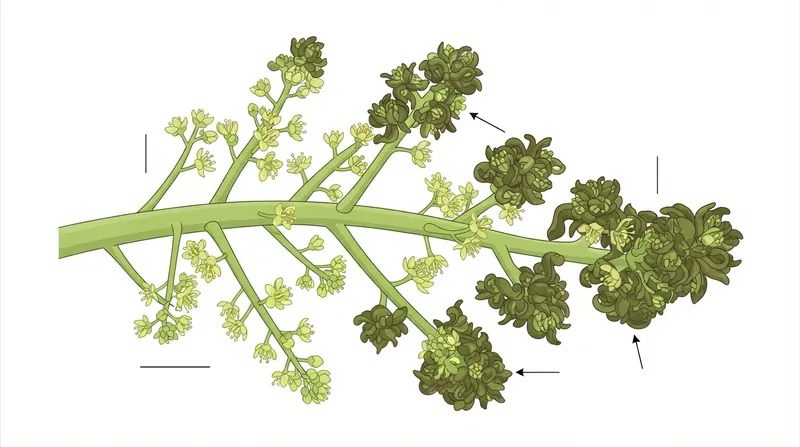
Mango malformation is the strangest and most frustrating mango disease in Pakistan: it turns young shoots into bunched, swollen tufts and flower panicles into dense, broom-like clusters that set no fruit at all. It is linked to the fungus Fusarium mangiferae, it spreads mainly through infected grafting wood, and — honestly — there is no cure for it. What a grower can do is keep it out of the nursery, cut it out early, and stop it travelling on scion wood.
What is mango malformation?
Mango malformation is a disease of mango in which shoots and flower panicles grow deformed, caused by fungi in the Fusarium family, principally Fusarium mangiferae. The fungus was long called Fusarium subglutinans before the malformation-causing strains were recognised as the separate species Fusarium mangiferae in 2002, and Pakistani research has consistently recovered it from malformed tissue.
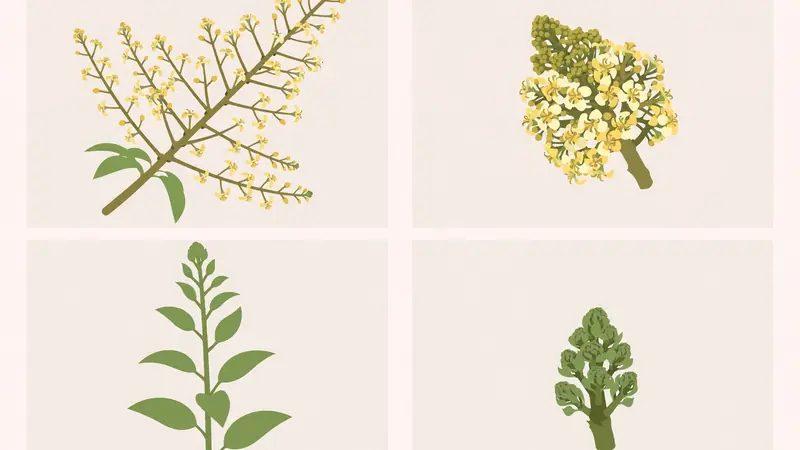
The disease has two forms. Vegetative malformation hits young trees and nurseries, producing bunched, swollen shoots with very short joints and small, scaly leaves. Floral malformation hits bearing trees, turning the panicle into a thickened, heavily branched cluster with masses of enlarged flowers that are sterile and set no fruit.
What does mango malformation look like?
A malformed shoot looks like a tight bunch of small leaves crowded on a swollen stem, with the joints between leaves almost gone — the classic bunchy-top look. A malformed panicle looks like a broom: thick, short, dark, and far more branched than a healthy panicle, carrying up to three times the normal number of flowers, all enlarged and sterile.
Malformed panicles usually stay on the tree long after healthy panicles have set fruit, which makes them easy to spot in the orchard from a distance. A tree with many malformed panicles will carry little or no fruit that season, even though the tree itself looks alive and green.
How bad is malformation in Pakistan? Our 110-orchard survey
These figures come from our own field survey, not from a published paper: 110 orchards of roughly 30-year-old trees were visited across seven districts of Punjab and four districts of Sindh, and malformation severity and incidence were recorded orchard by orchard. They describe what was seen in those orchards, in that survey — not a national estimate.
The survey found malformation everywhere it looked, but far worse in some districts than others. Multan recorded the highest figures in Punjab, with 75% severity and 90% incidence, while Rahim Yar Khan was lowest at 25% severity and 35% incidence. In Sindh, Mirpur Khas was highest at 80% severity and 95% incidence, and Hyderabad lower at 45% severity and 55% incidence.
| District | Severity | Incidence |
|---|---|---|
| Multan (Punjab) | 75% | 90% |
| Mirpur Khas (Sindh) | 80% | 95% |
| Hyderabad (Sindh) | 45% | 55% |
| Rahim Yar Khan (Punjab) | 25% | 35% |
How does malformation spread?
Malformation spreads chiefly through infected grafting material and through wounds. A nursery that takes scion wood from a malformed tree sells the disease with the plant, and an infected young tree can carry it into a healthy orchard and show symptoms only later, when it starts bearing.
The fungus also survives in malformed tissue left on the tree or on the orchard floor, and pruning tools can carry it from a diseased shoot to a healthy one. That is why the disease is worst where growers share scion wood informally and prune without cleaning tools between trees.
Is there a cure for mango malformation?
No — and this is the point the Mango Research Institute in Multan states plainly in its grower manual: no definite cure for malformation can currently be recommended. No spray, no injection and no fertiliser has been shown to cure a malformed tree, and any seller claiming a cure should be asked for trial data.
Management is risk reduction only: keep the disease out of the nursery, cut out what appears, and stop it travelling. A tree with a few malformed shoots can still crop from its healthy wood, but a tree that is malformed all over will not pay for its keep.
What can a grower actually do about malformation?
Start with clean planting material and never take scion wood from a malformed tree, even from a branch that looks healthy. Buy certified nursery plants from a source you trust, and inspect every young tree for bunchy shoots before it goes into the orchard.
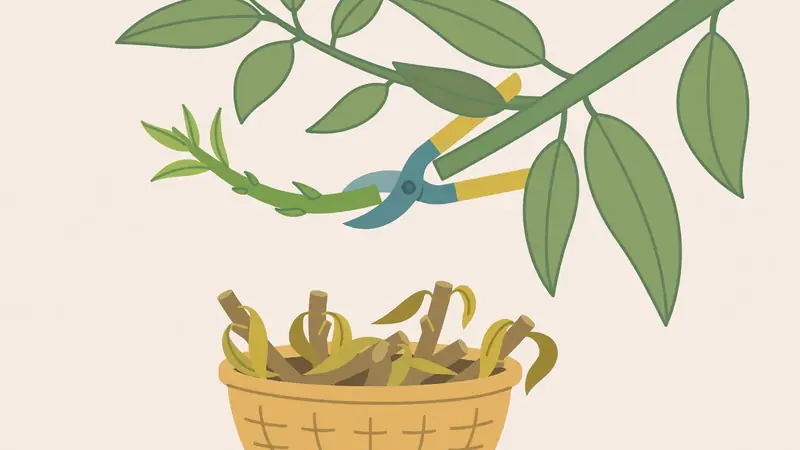
- Prune it out early. Cut affected terminals off together with 15–20 cm of healthy tissue below the visible damage, and burn the cuttings — do not leave them under the tree or throw them on a compost heap.
- Disinfect tools between trees. A quick wipe with a disinfectant after cutting a malformed shoot stops the tool carrying the fungus to the next tree.
- Keep the nursery clean. Rogue out any seedling with bunchy shoots immediately, and never sell or plant a seedling that looks even slightly malformed.
- Check the orchard at flowering. Walk the rows when panicles emerge and mark every malformed panicle for pruning — a few minutes per tree at flowering saves a season of lost fruit.
- Do not chase it with sprays. Fungicide sprays do not cure malformation, and money spent spraying malformed panicles is better spent on clean nursery plants and careful pruning.
What to do next
- Walk your orchard at flowering and count malformed panicles per tree — that count is your malformation picture for the year.
- Compare what you see on MangoWatch and check the district severity table from the survey.
- Prune out malformed shoots with healthy tissue below the cut, burn them, and never take scion wood from an affected tree.
Check a malformed panicle
Use the MangoWatch field checker to compare what you see against malformation and its look-alikes, with the district severity picture from the survey.
Advisory note
This article is advisory guidance, not a definitive diagnosis. A photo-based check can narrow down the likely disease, but only laboratory confirmation or an extension officer's field visit gives a certain diagnosis. Never spray on the basis of a blog post alone — check the current product label and your local agriculture department advice first. No pesticide doses are given in this article.
By Ghulam Mustafa — Final-year BSc (Hons.) Agriculture student, specialising in Plant Pathology, The Islamia University of Bahawalpur (IUB), Pakistan. CGPA 3.98/4.00.
Frequently asked questions
Can mango malformation be cured with a spray?
No. No spray, injection or fertiliser has been shown to cure mango malformation, and the Mango Research Institute states plainly that no definite cure can currently be recommended. Management is prevention and pruning only: clean nursery plants, no scion wood from affected trees, and cutting out malformed shoots with healthy tissue below the cut.
Will a malformed mango tree ever fruit again?
A tree with only a few malformed shoots can still fruit from its healthy wood, so it is worth keeping and pruning carefully. A tree that is malformed all over, season after season, sets little or no fruit and is usually better replaced with a certified healthy plant than kept out of hope.
Does malformation spread to other fruit trees?
Mango malformation is a mango disease; it does not attack citrus, guava or other fruit trees. It spreads between mango trees through infected grafting wood, wounds and tools. The risk to a neighbour is to their mango trees, not to their whole orchard, which is why clean scion wood matters so much.
Should I cut down a tree with malformation?
Not for a few malformed shoots — prune them out with healthy tissue below the cut and watch the tree next season. Cut the tree down only when most of its canopy is malformed year after year and it no longer carries a paying crop, and replace it with a certified nursery plant.
Sources
- Mango Diseases in Pakistan — Symptoms, Causes & Control (MMA Farms; traces detail to the Mango Research Institute, Multan manual) — consulted 2026-11-17
- Potential of Fusarium mangiferae as an etiological agent of mango malformation (Pakistan Journal of Botany 42(1), 2010) — consulted 2026-11-17
- PhytoAssist mango malformation survey — 110 orchards, Punjab and Sindh (survey observations, not a published paper) — consulted 2026-11-17
Continue: MangoWatch — mango field checker · Analyse a photo of the symptom · Citrus canker in Pakistan · Guava fruit fly in Pakistan