Citrus canker in Pakistan: Kinnow symptoms and control
Published 2026-11-17

Citrus canker is a bacterial disease that marks Kinnow leaves, twigs and fruit with corky, raised lesions ringed by yellow halos, and it is one of the most damaging diseases of Pakistan's citrus belt. It does not usually kill the tree, but it defoliates it, drops its fruit, and makes the fruit unmarketable — and because importing countries enforce zero-tolerance quarantine against it, a few visible lesions can disqualify a whole shipment.

What is citrus canker?
Citrus canker is a bacterial disease of citrus caused by Xanthomonas citri subsp. citri, a rod-shaped bacterium that attacks the leaves, twigs and fruit of nearly all citrus varieties. The bacterium enters through natural openings in the leaf or through wounds, and once inside it multiplies and raises the corky lesions that give the disease its name.
Kinnow mandarin, the variety that dominates Pakistani citrus, is among the most vulnerable. Citrus covers more than 200,000 hectares in Pakistan, mostly in Punjab, and Kinnow alone accounts for about 59% of the citrus area and 64% of production — so a disease that downgrades Kinnow fruit hits the whole industry.
What does citrus canker look like?
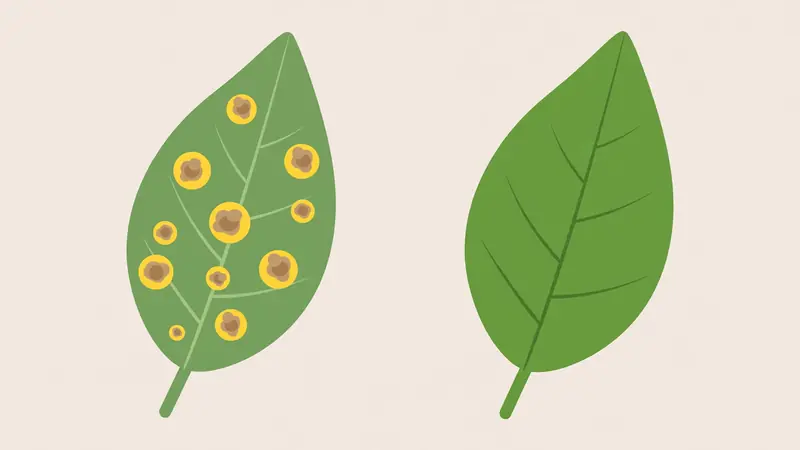
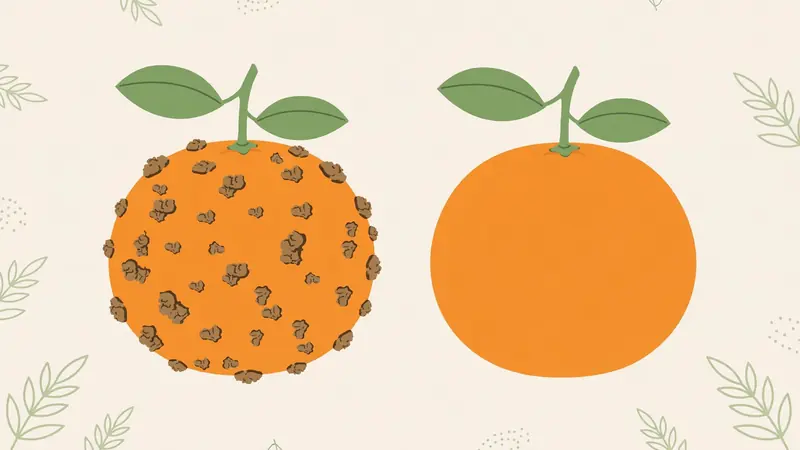
Canker starts as small, water-soaked spots on the leaf, usually on the underside, that grow into raised, blister-like pustules and then darken into rough, corky, tan-to-brown lesions ringed by a distinct yellow halo. Lesions on fruit look rough and scabby, sit in shallow craters in the rind, and do not go deep — but they make the fruit unsaleable.
On twigs the lesions can join together and split the bark along the stem, and a heavily infected tree defoliates, suffers dieback and drops fruit early. The single most useful field mark is the combination: a raised, rough, corky spot with a yellow halo around it, on leaf and fruit at the same time.
When is citrus canker worst in Pakistan?
Citrus canker peaks from August to October and again during the spring flush, when new tender growth is abundant and the weather is warm and wet. The bacterium spreads in wind-driven rain, which carries it from lesion to leaf, and it enters easily through wounds — including the tiny feeding wounds left by citrus leaf miner.
Farmers in Sargodha, Mandi Bahauddin, Toba Tek Singh and Sahiwal report increasing cases, particularly in humid and rainy seasons. Once the disease is established in an orchard, complete eradication is nearly impossible, which is why prevention carries more weight than cure.
How does citrus canker spread?
Canker spreads through rain splash, wind-driven rain, infected nursery plants and pruning tools. A single infected nursery plant can carry the bacterium into a healthy orchard, and a pruning cut made on a diseased twig can carry it to the next tree on the same blade.
The bacterium also survives on fallen leaves and infected debris under the tree. Overhead irrigation that splashes water onto leaves helps it move, while drip or furrow irrigation keeps the foliage dry and slows it down considerably.
How do I control citrus canker?
Control is a combination of clean planting material, orchard hygiene and protective sprays timed to the flushes. Start with certified, disease-free nursery plants, prune out infected leaves, twigs and fruit, and destroy them away from the orchard rather than leaving them under the trees.
- Disinfect tools. Wipe pruning tools with a disinfectant after every use on a diseased tree, so the blade does not carry bacteria to the next one.
- Stop the splash. Use drip or furrow irrigation instead of overhead watering, and plant windbreaks such as poplar or eucalyptus along the orchard border to slow wind-driven rain.
- Feed carefully. Too much nitrogen pushes soft, tender growth that the bacterium infects easily; balanced fertilisation grows tougher leaves that resist it better.
- Control leaf miner. Leaf miner feeding opens the wounds canker needs, so keeping leaf miner down is part of canker control, not a separate job.
- Spray protectively, not curatively. Copper-based bactericides such as copper oxychloride, copper hydroxide and Bordeaux mixture remain the backbone of canker control, and antibiotics such as kasugamycin and streptomycin are used against the bacterium in Pakistani guidance. No doses are given here; check the current product label and local extension advice first.
- Time sprays to the flushes. A Sargodha trial on ten-year-old Kinnow sprayed in March, April, August and September and found Bordeaux mixture the most suitable treatment, with copper hydroxide and onion extract also effective — timing to the flushes matters more than the number of sprays.
What to do next
- Walk the orchard now and check the undersides of young leaves for water-soaked spots with yellow halos.
- Photograph anything suspicious and check it on PhytoAssist before you spray.
- Plan windbreaks and drip irrigation for the next season, and buy only certified nursery plants.
Check a suspicious citrus leaf
Photograph the leaf, top and underside, and run it through PhytoAssist photo detection — then compare the result with the canker pattern in this article before you decide to spray.
Advisory note
This article is advisory guidance, not a definitive diagnosis. A photo-based check can narrow down the likely disease, but only laboratory confirmation or an extension officer's field visit gives a certain diagnosis. Never spray on the basis of a blog post alone — check the current product label and your local agriculture department advice first. No pesticide doses are given in this article.
By Ghulam Mustafa — Final-year BSc (Hons.) Agriculture student, specialising in Plant Pathology, The Islamia University of Bahawalpur (IUB), Pakistan. CGPA 3.98/4.00.
Frequently asked questions
Is citrus canker a fungus or a bacterium?
Citrus canker is caused by a bacterium, Xanthomonas citri subsp. citri, not by a fungus. That matters because fungicides do not control it — control relies on copper-based bactericides, antibiotics such as kasugamycin and streptomycin, and on hygiene and windbreaks that slow its spread.
Can I eat fruit with citrus canker?
Canker lesions stay in the rind and do not make the fruit flesh unsafe, but heavily lesioned fruit is usually unmarketable and is discarded. Fruit with a few small lesions can be eaten after washing, but for export the fruit is rejected entirely — importing countries enforce zero tolerance against canker.
Will canker kill my Kinnow tree?
Canker rarely kills a mature tree outright, but a severe attack defoliates it, causes dieback and drops fruit, so the tree crops poorly for years. Young trees suffer more. The economic damage comes from lost yield and rejected fruit, not from dead trees.
Does canker spread to mango or guava?
No. Citrus canker attacks citrus and its close relatives only; it does not infect mango, guava or other fruit trees. It does spread between citrus trees in wind-driven rain and on tools, so a cankered Kinnow orchard is a risk to neighbouring citrus, not to the whole farm.
Sources
- Citrus Canker in Pakistan: A Growing Threat to the Citrus Industry (Cultivation Agriculture) — consulted 2026-11-17
- Canker a serious threat to citrus fruits (AgriHunt) — consulted 2026-11-17
- Comparative efficacy of different antibiotics, fungicides and botanical extract for the control of citrus canker of Kinnow mandarin (Pakistan Journal of Phytopathology) — consulted 2026-11-17
Continue: Analyse a photo of the symptom · Browse citrus diseases in the encyclopedia · Mango malformation in Pakistan · Guava fruit fly in Pakistan