Greenhouse Disease Prevention: Sanitation, Humidity and Environmental Management
Published 2026-11-18
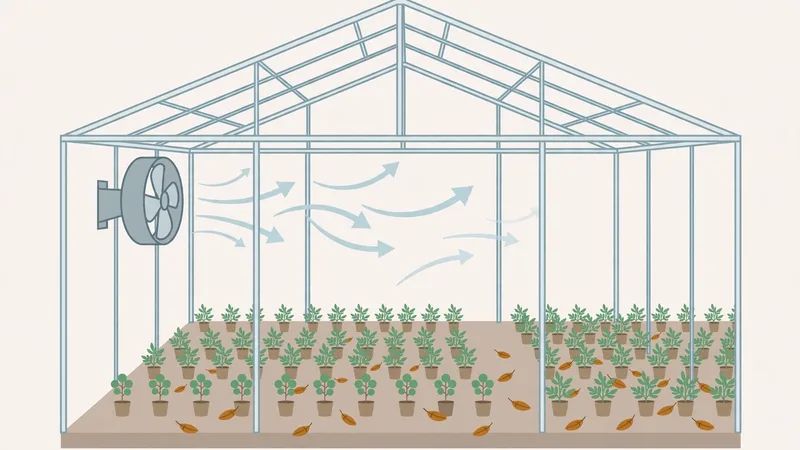
Greenhouse disease prevention is a system, not a spray: start with a clean house, keep leaves dry and air moving, water in the morning at the base, space plants so the canopy dries, inspect incoming plants, and scout two to three times a week in humid weather. A greenhouse protects crops from rain, but it also traps humidity, and the diseases that thrive there — gray mold, leaf mold, downy and powdery mildew, Phytophthora and Pythium root rots — all love wet leaves, still air and warm, humid nights. No single humidity setting prevents every disease, and no fungicide compensates for a house that is dirty, crowded and wet. Prevention is cheaper than cure, and in a greenhouse it is usually the only thing that works reliably.
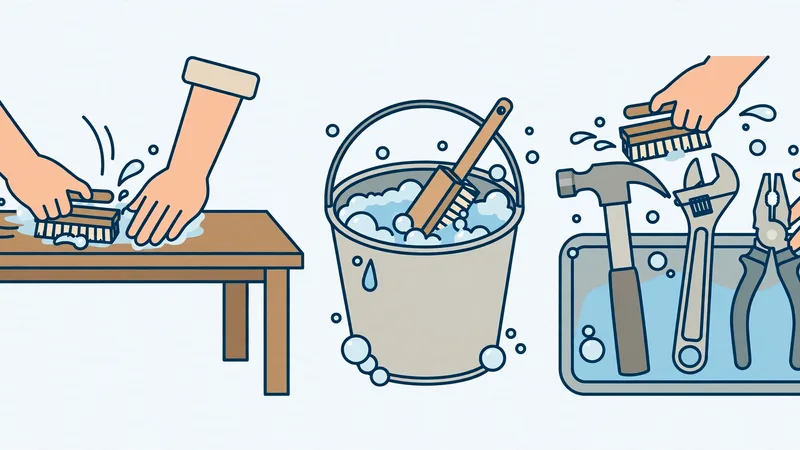
Greenhouse disease prevention in one sentence
The disease triangle in a greenhouse
Three things must come together for disease: a susceptible host, a pathogen, and environmental conditions that favour it. That is the disease triangle, and greenhouse prevention attacks all three corners at once. Resistant varieties and healthy, vigorous plants make the host corner smaller. Sanitation, clean media and clean water make the pathogen corner smaller. Humidity, airflow, temperature and watering make the environment corner smaller. Remove any one corner and there is no disease — but in practice you work on all three, because no single measure is complete. A resistant variety in a dirty, wet house will still get sick; a clean house with a susceptible variety and wet leaves will still get sick. The routine below is organised by corner, so you can see which part of the system each job belongs to.
Sanitation: between crops, and during the crop
Sanitation greatly enhances greenhouse disease management, and it starts before the crop. The UMass Extension greenhouse best-management guide is explicit: before growing a crop, clear the greenhouse of plant debris, weeds, flats and tools, then wash and disinfect empty benches, potting tables, storage shelves, tools and pots. At the end of each cropping cycle, discard unsold stock — plants carried over from previous crops may harbour plant pathogens — and remove all diseased plants from the house. During the crop, remove infected material promptly and dispose of it outside the growing area, and sanitise tools between uses (Virginia Tech's greenhouse tomato guide makes the same point). A critical detail from NC State: remove plant debris and soil before applying a sanitiser, because a sanitiser's activity is minimised on contact with organic material — spraying disinfectant onto a dirty bench disinfects the dirt, not the bench. Keep the floor clean and dry, keep weeds out of and around the house (they host pathogens and insects), and use footbaths or shoe-change stations at entries where the Penn State risk assessment recommends them. Do not bring in plants from unknown sources, and never take cuttings from infected stock plants.
Humidity and condensation: the dew-point problem
High relative humidity is one of the major factors contributing to mildew and disease problems in a greenhouse, especially Botrytis, and it is especially troublesome when houses are tightly sealed to conserve energy and when nights are cool. The mechanism is condensation: when warm, humid air meets a cool surface — a leaf, a roof panel, a pipe — water condenses on it, and a wet leaf is an infected leaf. Virginia Tech gives the tomato examples: leaf mold thrives when relative humidity exceeds 85% with temperatures of 65–80 °F, and gray mold is most severe with humidity above 90% and temperatures of 59–70 °F, particularly with free moisture. Those are crop-specific examples, not universal safe limits — the point is that long wet periods, not a single humidity number, drive disease. Lower humidity by heating and venting together: UMass describes the standard practice of keeping vents open slightly (or running exhaust fans at low capacity) when the heat comes on in the late afternoon, so cooler air enters while warm, moist air leaves, and as the entering air is heated the relative humidity drops; after 5 to 10 minutes the vents are closed or the fans stopped. Horizontal airflow (HAF) fans circulate air and distribute heat, reducing the cold spots where condensation forms. Use a thermometer and a hygrometer and watch the trend — a house that is wet every morning is a house that will get Botrytis, whatever the daytime reading says.
Watering: timing, method and drainage
Water is the other half of the wetness problem, and it is the half you control directly. Water early in the day so that relative humidity decreases before nightfall and foliage dries during the day — Penn State's greenhouse risk assessment makes this a checklist question, and UMass lists early watering alongside air movement and spacing as core disease-pressure measures. Prefer drip, trickle, capillary mat or ebb-and-flow watering, which keep plant surfaces dry, over overhead irrigation, which splashes pathogens from plant to plant. Penn State also warns about the water source: well or municipal water is generally safer than surface water, which may carry Pythium, Phytophthora and Erwinia. Choose a well-drained growing medium, test for soluble salts periodically, and apply water for optimum growth — not more. Overwatering is the most common avoidable cause of root rot in greenhouses: a medium that never drains is a Phytophthora nursery. Let the root zone drain between waterings, and make sure benches and floors drain rather than ponding.
Spacing, pruning and canopy airflow
Crowded plants stay wet. Space plants for good air movement and sunlight, which dries foliage faster and improves spray coverage if a spray is ever needed. Prune to improve light penetration and air movement — Virginia Tech notes that pruning significantly reduces disease pressure in greenhouse tomato — and remove the lowest leaves that touch the medium or the bench. Keep the canopy open enough that you can see through it and that air from the HAF fans actually reaches the inner leaves. Good air circulation that reduces relative humidity inhibits gray mold activity, as Penn State's assessment states. The test is simple: after watering in the morning, the foliage should be dry well before evening. If it is still wet at dusk, the spacing, the pruning or the airflow needs work, and no fungicide schedule will fix that.
Starting clean: media, seed and transplants
Prevention starts before the crop arrives. Use fresh, pathogen-free growing media — soilless mixes based on peat, perlite or vermiculite are free of pathogens by manufacture, while field soil, sand and uncomposted materials can carry them, according to Penn State. Heat can eliminate pathogens in media if applied properly. Buy clean, healthy seed and transplants from a reputable source, and inspect every incoming plant above and below ground before accepting it into the facility — NC State is explicit that plants should look healthy above and below ground before they are accepted. Quarantine new arrivals away from the main crop for a few days if you can, and watch them. Use resistant cultivars whenever possible: on greenhouse tomato, leaf mold and gray mold pressure falls sharply on resistant varieties, and the seed catalogue's resistance codes are worth reading before you order, not after the first spots appear.
Scouting routine and records
Prevention without scouting is guesswork. Virginia Tech recommends scouting greenhouse tomatoes 2 to 3 times per week, particularly during periods of high humidity — that frequency is a good default for most greenhouse crops. Walk the house systematically, not just the edges: check the lowest leaves first, the undersides, the flowers at bloom, and the plants near vents, doors and wet spots, where disease usually starts. Record what you find — date, location in the house, crop, symptom, and what you did — so you can see whether a problem is spreading or holding, and so next season you know where it started. A record also tells you whether a control worked: if the same corner of the house is always first, the cause is probably environmental (a cold spot, a drip, a vent) rather than the variety. Keep a simple weekly checklist and do it on the same days each week, so scouting becomes a habit rather than a reaction to visible damage.
Checklists
Start of season: clear all debris, weeds, flats and tools; wash and disinfect benches, tables, shelves, tools and pots; check drainage and ventilation; inspect and repair screens on vents; buy clean media and resistant varieties; inspect incoming plants above and below ground. Weekly: scout 2–3 times, record findings; remove infected material and weeds; check that foliage dries before evening; check HAF fans and vents are running; water early and at the base; sanitise tools between jobs; check the hygrometer trend, not just one reading. At the end of the crop: discard unsold stock, remove all debris, and sanitise the empty house before the next crop.
What to do next
Walk your greenhouse this week with a hygrometer and a notebook. Note where the foliage is still wet at dusk, where the air does not move, and where debris has collected — those three spots are where the next outbreak will start. Fix the airflow and the watering first, then the sanitation, and scout twice a week until the house stays dry overnight.
Check a greenhouse plant
Photograph the symptoms and get a likely match — then compare it with the greenhouse diseases in this series.
Advisory note
This article is advisory guidance, not a definitive diagnosis. A photo-based check can narrow down the likely disease, but only laboratory confirmation or an extension officer's field visit gives a certain diagnosis. Never spray on the basis of a blog post alone — check the current product label and your local agriculture department advice first. No pesticide doses are given in this article.
By Ghulam Mustafa — Final-year BSc (Hons.) Agriculture student, specialising in Plant Pathology, The Islamia University of Bahawalpur (IUB), Pakistan. CGPA 3.98/4.00.
Frequently asked questions
What is the most important greenhouse disease prevention measure?
No single measure — it is the system: sanitation between crops, dry foliage, moving air, morning watering and scouting. If you must pick one, pick dry leaves: most greenhouse leaf diseases need hours of leaf wetness to infect. Each measure covers a different weakness, so dropping one leaves a gap the others cannot close.
How do I lower humidity in a greenhouse?
Heat and vent together — warm the incoming air so its relative humidity drops — and keep air moving with horizontal airflow fans. Avoid sealing the house tight on cool nights, and water early so foliage dries before nightfall. Venting without heat just brings cold, damp air in, so the two must work together.
How often should I scout a greenhouse crop?
Two to three times per week, particularly in humid weather, according to Virginia Tech's greenhouse tomato guidance. Check lower leaves, leaf undersides, flowers at bloom, and the plants near vents and wet spots first. Catching the first spots early keeps a small problem from becoming a house-wide outbreak.
Should I disinfect benches before or after cleaning them?
Clean first, then disinfect. Sanitiser activity is minimised on contact with organic material, so wash off debris and soil before applying any disinfectant. A disinfectant on dirty benches is wasted, because the organic matter on the surface shields the pathogens underneath it.
Can I reuse potting mix in a greenhouse?
Only if it is properly treated — heat can eliminate pathogens if applied correctly. Untreated reused mix can carry Pythium, Phytophthora and other soilborne pathogens into the next crop, so fresh pathogen-free media is the safer default. Heat treatment needs the right temperature held long enough, and guessing it risks carrying the problem into the next crop.
Sources
- Penn State Extension — Assessing the Risk of Disease in Greenhouses (updated 8 July 2025) — consulted 2026-11-18
- UMass Extension — Greenhouse Best Management Practices, Disease Management — consulted 2026-11-18
- Virginia Tech Extension — Identifying and Managing Three Major Disease Threats in Greenhouse Tomatoes (SPES-820) — consulted 2026-11-18
- NC State Extension — Phytophthora Blight and Root Rot on Annuals and Herbaceous Perennials — consulted 2026-11-18
Continue: Powdery mildew vs downy mildew · Botrytis gray mold: identification and management · Fungicide FRAC groups and resistance management