Botrytis Gray Mold: Disease Identification and Integrated Management
Published 2026-11-18
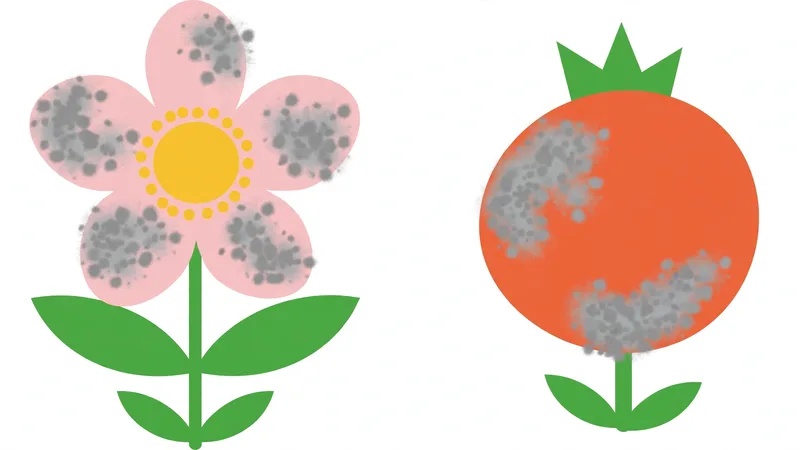
Botrytis gray mold, caused most commonly by the fungus Botrytis cinerea, is the grey, fuzzy mould that appears on rotted flowers, leaves, stems and fruit when plants stay wet. It starts as tiny, almost translucent spots that turn brown and water-soaked, and infected tissue becomes dark, soft and wilted — then the characteristic grey fuzz of spores covers it. The disease needs wetness: spores germinate and infect only after plants have been continuously wet for 6 or more hours, or relative humidity has stayed above about 90% for 6 or more hours, according to UC IPM. It attacks a very wide range of crops — strawberry, blueberry, tomato, grape, ornamentals — and it is worst in cool, humid conditions, especially at bloom. Control is integrated: dry the canopy and improve airflow first, remove infected material, and use label-checked fungicides preventively at the right growth stage, rotating FRAC groups.
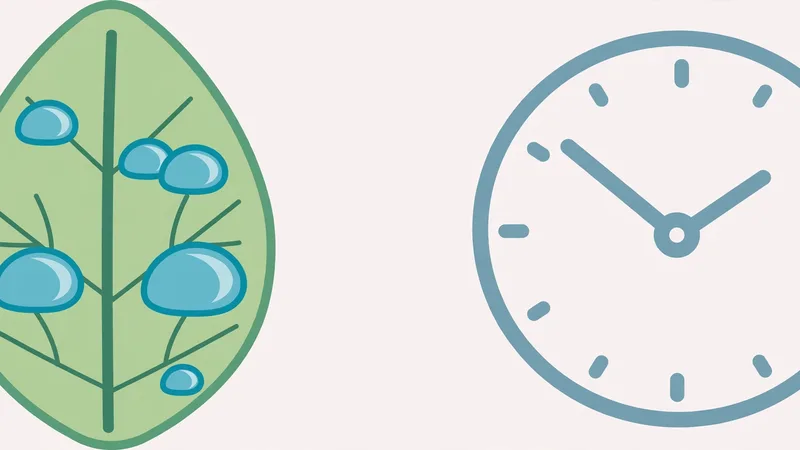
Botrytis gray mold: what it is and how to spot it
Identification: flowers, leaves, stems and fruit
On flowers, Botrytis often begins during bloom. On blueberry, NC State Extension describes infected blossoms turning brown instead of their typical white, then brown-black to grey as the grey-tan mould forms — and the dead blossoms often stay on the bush after fruit set, which is an important diagnostic feature. On strawberry, fuzzy grey sporulation on rotted fruit and leaf tissue is the classic symptom, with light brown lesions on fruit and whole rotted berries that keep their shape but become tough and dry (mummies), according to UMass Extension. On greenhouse tomato, Virginia Tech describes infections beginning with blossom blight and aborted flowers, then water-soaked lesions on the calyx or stem that become cankers covered with grey fuzzy mould; fruit may rot, especially where it is damaged or in contact with infected tissue. On leaves, look for tan to grey necrotic lesions, often starting at a wound, a dead petal stuck to the leaf, or a leaf tip that stays wet. The grey fuzz itself is the confirmation: a soft, dusty, grey-tan growth of mycelium and spores that gives the disease its name. If the mould is white and powdery, think powdery mildew; if it is grey and fuzzy on rotted tissue, think Botrytis.
Conditions that favour it
Wetness and cool, humid air. The UC IPM rule — 6 or more hours of continuous wetness, or humidity above about 90% for 6 or more hours — is the single most useful number for this disease, because it tells you what to manage: keep leaves dry and the air moving. Virginia Tech gives the greenhouse tomato window: most severe in cool, humid conditions with relative humidity above 90% and temperatures between 59 and 70 °F, particularly when free moisture is present. On blueberry, NC State gives the temperature detail: optimum spore germination at 68–77 °F and optimum infection at 61–68 °F, with moderate temperatures and frequent rain favouring development. On strawberry, UMass notes the fungus overwinters in mummified fruit, in weeds, or as long-term survival structures called sclerotia — but most commonly in living strawberry tissue, proliferating in spring as leaves die. Dense canopies, poor airflow, overhead irrigation, and dead flowers or leaves left in the canopy all extend wetness and feed the fungus. A crop that is pruned open, spaced well and watered at the base in the morning is a much harder target.
Disease cycle: where it comes from each season
Botrytis survives between crops as sclerotia in soil and debris, as mummified fruit, and in living plant tissue. In spring, spores are produced from that surviving material and carried by wind and water splash to flowers and young tissue. Flowers are the main entry point on many crops: spores germinate on petals and in the flower, the fungus colonises the dying flower tissue, and from there it moves into the young fruit, the stem or the leaf. That is why bloom is the critical period on blueberry and strawberry — the spray and sanitation decisions made at bloom decide the harvest. Secondary spread happens through the season: spores from one rotted fruit infect the fruit touching it, so a single missed berry can start a cluster of rot. Wounds help it in — hail, insect damage, pruning cuts and handling damage are all entry points. Removing dead flowers, mummified fruit and infected leaves breaks this cycle more reliably than any spray applied after rot is visible.
Integrated management: cultural first
Cultural control is the foundation, because it removes the wetness the fungus needs. Plant on sites with good air and soil drainage. Space rows and plants wide enough for air movement, prune annually to open the canopy, and control weeds that trap humidity. Water at the base in the morning, not overhead in the evening, so foliage dries during the day. Remove infected flowers, fruit and leaves promptly — bag them and destroy them away from the crop — and remove mummified fruit at the end of the season. On strawberry, UMass recommends scouting weekly from the pre-bloom period and checking the previous year's records for carry-over inoculum. On greenhouse tomato, Virginia Tech recommends scouting 2 to 3 times per week in high humidity, removing infected tissue outside the growing area, and sanitising tools between uses. Choose cultivars with known tolerance where they exist — on blueberry, NC State notes grey mould is mostly an issue of rabbiteye cultivars and of less importance on southern highbush. Ventilation and heating to lower nighttime humidity, plus horizontal airflow fans, are the greenhouse tools that matter most; the greenhouse prevention guide in this series covers them in detail.
Fungicides and biological control: timing and rotation
When fungicides are needed, timing is bloom. On blueberry, NC State states that applying fungicides during bloom is key for blossom blight, and that sprays during fruit development are sometimes helpful if blossom blight is established but are not as effective as bloom sprays. The same principle holds on strawberry and other crops: protect the flower, because the flower is the door. Always check the current US label for the crop, the state and the growth stage, and use only products labelled for that use. Rotate FRAC groups — Botrytis has a well-documented history of resistance to several single-site groups, including FRAC 1 (benzimidazoles) and FRAC 9 (anilinopyrimidines) in vineyards — and mix or alternate with multi-site materials where the label allows. The FRAC guide in this series explains the rotation. Biological products (for example, Streptomyces-based materials noted in the UMass strawberry factsheet) may provide some level of control and work best when applied with a spreader-sticker before an anticipated infection period — they are a supplement to cultural control, not a replacement for it. Never raise the rate or shorten the interval to compensate for a spray that did not work; if control fails, the cause is usually timing, coverage or resistance, and the label and your extension adviser are the next step, not a stronger dose.
What to do next
Scout at bloom: look for brown, dead flowers that stay on the plant and for grey fuzz on fruit. Remove infected material the same day, open the canopy, and water at the base in the morning. If fungicide is needed, apply it at bloom with a product labelled for your crop, and rotate the FRAC group next time.
Check a mouldy flower or fruit
Photograph the affected flowers and fruit and get a likely match — then compare it with the symptoms in this article.
Advisory note
This article is advisory guidance, not a definitive diagnosis. A photo-based check can narrow down the likely disease, but only laboratory confirmation or an extension officer's field visit gives a certain diagnosis. Never spray on the basis of a blog post alone — check the current product label and your local agriculture department advice first. No pesticide doses are given in this article.
By Ghulam Mustafa — Final-year BSc (Hons.) Agriculture student, specialising in Plant Pathology, The Islamia University of Bahawalpur (IUB), Pakistan. CGPA 3.98/4.00.
Frequently asked questions
What does Botrytis gray mold look like?
Grey, fuzzy, dusty mould on rotted flowers, fruit, leaves or stems. It starts as tiny translucent spots that turn brown and water-soaked, and infected tissue becomes dark, soft and wilted before the grey fuzz covers it. The fuzz appears after the tissue has already rotted, so by the time you see grey mould the damage underneath is done.
How long do leaves need to stay wet for gray mold to infect?
Six or more hours of continuous wetness, or relative humidity above about 90% for 6 or more hours, according to UC IPM. Keeping foliage dry is the most effective control. That is why dry foliage matters more than any spray: if leaves stay dry through the day, the spores cannot germinate.
When is the most important time to control Botrytis?
At bloom. Flowers are the main entry point on blueberry, strawberry and many other crops, and fungicide applied during bloom is far more effective than sprays applied after rot is established. Protecting flowers protects the fruit that follows, since infected petals carry the fungus into the young fruit.
Can gray mold be cured once fruit is rotted?
No. Rotted fruit will not recover. Remove it promptly so its spores do not infect neighbouring fruit, and protect the healthy flowers and fruit that remain. Leaving rotted fruit on the plant turns it into a spore source for the whole row.
Does Botrytis attack only fruit?
No. It attacks flowers, leaves, stems and fruit, and on tomato it can girdle stems with cankers. Any soft, succulent tissue that stays wet is susceptible. Flowers and soft stems are often the first entry points, especially where tissue stays wet after rain or watering.
Sources
- UC IPM — Botrytis Blight, or Gray Mold — consulted 2026-11-18
- Virginia Tech Extension — Identifying and Managing Three Major Disease Threats in Greenhouse Tomatoes (SPES-820) — consulted 2026-11-18
- UMass Extension — Strawberry – Botrytis Gray Mold (Botrytis cinerea), Fact Sheet SD-003 (March 2020) — consulted 2026-11-18
- NC State Extension — Botrytis (Gray Mold) Blossom Blight and Fruit Rot of Blueberry (12 March 2025) — consulted 2026-11-18
Continue: Greenhouse disease prevention: sanitation, humidity and environmental management · Fungicide FRAC groups and resistance management · How to diagnose plant diseases from leaf symptoms