Fusarium Wilt vs Verticillium Wilt: How to Distinguish Them
Published 2026-11-18
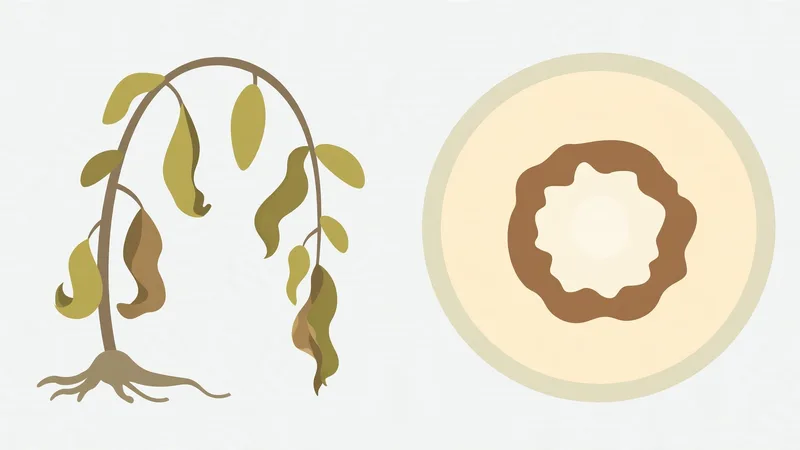
Fusarium wilt and Verticillium wilt are both soilborne fungal diseases that block the plant's water-conducting tissue, and they are extremely difficult to tell apart by looking. The clues lean rather than decide: Fusarium wilt usually starts with one-sided wilting and yellowing in warm weather, with dark brown discoloration in the stem that extends well up the plant; Verticillium wilt often shows wilting in the heat of the day with recovery at night, V-shaped yellowing, and lighter discoloration that does not extend as far up the stem or into the petioles. The University of Connecticut Extension states the limit plainly: the two diseases are very similar and must be differentiated by an experienced diagnostician — and UC IPM adds that their vascular discoloration is extremely difficult to distinguish, although Fusarium discoloration tends to be darker. If you need the name for certain, a laboratory test is the only honest way to get it. The good news is that the response is largely the same for both.
Fusarium wilt vs Verticillium wilt: the honest answer first
What a vascular wilt is
Both fungi enter through the roots and colonise the xylem — the pipes that carry water from the roots to the leaves. As the fungus grows and the plant reacts, the pipes clog, so the leaves above behave like a plant that cannot drink: they wilt, yellow and die even though the soil is moist. That is the key field observation. If the soil is moist two inches down and the plant is wilting anyway, the problem is in the pipes, not in the watering. Both fungi survive in the soil without a host — Fusarium as resistant resting structures, Verticillium as tiny microsclerotia — so the ground itself stays infectious after the crop is gone, and an infected plant cannot be cured. Management is therefore about the next planting, not the sick one: resistant varieties, rotation away from hosts, and removing infected plants so they do not add more inoculum to the soil.
Fusarium wilt in detail
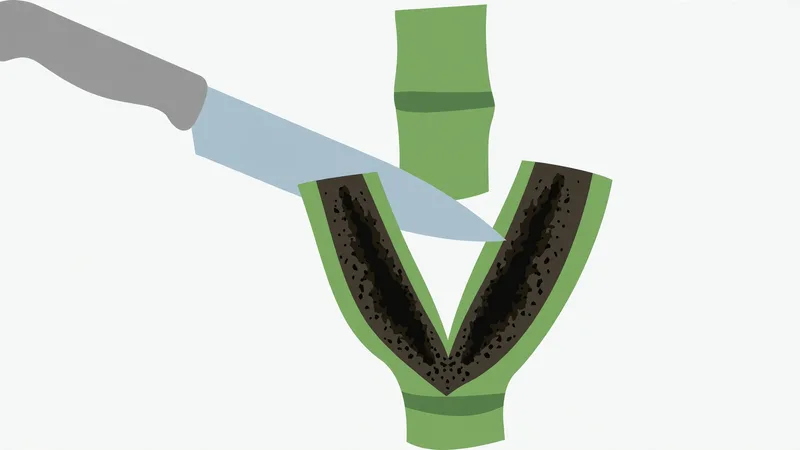
Fusarium wilt of tomato is caused by Fusarium oxysporum f. sp. lycopersici, a form of the fungus specialised to tomato; other formae speciales attack other crops, and each attacks only its own host or a small group of hosts. According to UConn Extension, it begins with lower leaves wilting or drooping, turning yellow then brown and dying, often on just one branch or one side of the plant. Leaflets on one side of a petiole may be affected while those on the other side are not, and the bases of affected stems are sometimes enlarged. Symptoms often become apparent while fruit is enlarging, although plants may be affected at any age from seedling to maturity. Fusarium favours warm conditions and can affect plants at any growth stage. When the stem is cut open, the vascular ring is brown — tending darker than Verticillium — and the discoloration extends further up the plant, including into the petioles. The pith in the centre of the stem is not affected in either disease, which helps separate vascular wilts from some other stem problems.
Verticillium wilt in detail
Verticillium wilt is caused by Verticillium dahliae and Verticillium albo-atrum, which cause nearly the same symptoms and can infect nearly 200 species, including many vegetables, flowers and trees — a far wider host range than Fusarium's. UConn Extension describes the pattern: it often begins with wilting during the hottest part of the day and recovering at night. Leaves may turn yellow starting at the edges and between the veins and spreading inward, usually affecting both sides of the leaf, and leaflets may show a characteristic V-shaped or fan-shaped yellowing with the widest part of the V on the leaf edge. Verticillium generally affects plants when they are nearing maturity, and it favours cooler conditions than Fusarium. When the stem is cut open, the vascular ring is discoloured but the discoloration does not extend as far up the plant as in Fusarium, and it does not occur in the petioles. Trees and some perennials can live with Verticillium for years with good care; annual vegetable crops generally cannot be saved once symptoms are advanced.
The stem-cut test, step by step
Sacrifice one wilting plant — the test destroys it, so pick the worst one. Cut the main stem across, low down, a few inches above the soil line, with a clean sharp knife. Look at the cross-section in good light. A healthy plant shows a pale, near-ivory vascular ring just under the bark. A wilted plant with a brown ring has a vascular wilt — either Fusarium or Verticillium. Then cut the stem open lengthwise and see how far up the dark discoloration extends, and whether it reaches the petioles. Discoloration extending well up the stem and into the petioles, dark brown in colour, leans Fusarium. Lighter discoloration that stops lower down and spares the petioles leans Verticillium. Neither finding is proof: UConn notes that symptoms may be one-sided or two-sided in either disease, so do not over-read a single plant. Repeat the cut on a second plant if you have one. Photograph the cross-section and the lengthwise cut with a coin for scale, and keep the sample for the lab if you intend to submit one.
Side-by-side comparison
| Feature | Fusarium wilt | Verticillium wilt |
|---|---|---|
| Pathogens | Fusarium oxysporum formae speciales | Verticillium dahliae, V. albo-atrum |
| Host range | Narrow — host-specific | Very wide — nearly 200 species |
| First symptoms | Lower leaves wilt, yellow, brown, die | Wilts in midday heat, recovers at night |
| Symmetry | Often one-sided (one branch, one side of a leaflet) | Usually both sides; may be one-sided too |
| Leaf pattern | Yellowing then browning from lower leaves up | V-shaped or fan-shaped yellowing from leaf edges |
| Vascular ring | Dark brown, tends darker | Brown, tends lighter |
| Discoloration extent | Extends far up the stem, into petioles | Does not extend as far; not in petioles |
| Favoured weather | Warm | Cooler |
| Growth stage | Any age, often as fruit enlarges | Usually nearing maturity |
| Certain diagnosis | Lab test only | Lab test only |
Rule-outs: what else wilts a plant
Before settling on a vascular wilt, rule out the common mimics. Drought wilts the whole plant and the plant recovers after watering — a vascular wilt does not. Overwatering and root rot (including Phytophthora) also wilt plants, but the roots are soft, brown and rotting, and the stem ring may be clean; dig and check the roots. Bacterial wilt can look similar on tomato, but a cut stem held in a glass of water may show a milky stream of bacteria — that test is a field indicator, not a confirmation, and a lab should confirm it. Herbicide drift can cause twisted, yellowing growth without any vascular browning at all. If the soil is moist, the roots are firm and white, and the stem ring is brown, you have a vascular wilt. If the stem ring is pale, look elsewhere.
What to do when it is a vascular wilt
An infected plant cannot be cured, so the work is containment and prevention. Pull the infected plant with its roots, bag it, and destroy it away from the crop — do not compost it, because home compost does not get hot enough to kill soilborne fungi, and do not leave it on the soil where it will add inoculum. Disinfect tools after handling infected plants. Do not plant the same crop, or another host, in that ground next season: rotate to an unrelated crop, and remember that Verticillium's wide host range makes rotation harder — check which crops are hosts before choosing the rotation. The single most effective step is resistant varieties: on tomato, resistance is shown by the letters F or FF after the variety name, with FF meaning resistance to two races of Fusarium wilt. Ask your seed supplier for the current resistant varieties for your area, and treat resistance as protection for the next crop, not a rescue for this one. Soil solarisation in the warmest part of the year can reduce soil inoculum in some situations, but it is not a guaranteed clean-up and it works best on small beds in hot climates.
What to do next
Cut one wilting stem today and look at the vascular ring: pale means look elsewhere, brown means a vascular wilt. Photograph the cut, pull and destroy the worst plants, and send a sample to your local extension diagnostic clinic if you need the name for certain — the sample guide in this series explains how. Then plan the next planting around resistant varieties and a rotation away from hosts.
Check a wilting plant
Answer a few questions about the wilt and get a likely match — then confirm with the stem cut described in this article.
Advisory note
This article is advisory guidance, not a definitive diagnosis. A photo-based check can narrow down the likely disease, but only laboratory confirmation or an extension officer's field visit gives a certain diagnosis. Never spray on the basis of a blog post alone — check the current product label and your local agriculture department advice first. No pesticide doses are given in this article.
By Ghulam Mustafa — Final-year BSc (Hons.) Agriculture student, specialising in Plant Pathology, The Islamia University of Bahawalpur (IUB), Pakistan. CGPA 3.98/4.00.
Frequently asked questions
How do I tell Fusarium wilt from Verticillium wilt?
By leaning clues, not certainty: Fusarium is often one-sided in warm weather with dark brown vascular discoloration extending well up the stem and into petioles; Verticillium often wilts in midday heat and recovers at night, with V-shaped yellowing and lighter discoloration that stops lower down. Only a lab test decides for certain.
Can a plant recover from Fusarium or Verticillium wilt?
No. Both fungi block the water-conducting tissue, and an infected plant cannot be cured. Remove infected plants, and protect the next planting with resistant varieties and rotation. The blocked vessels cannot be reopened, so the plant keeps wilting even with water, and the only useful action is removal and prevention for the next crop.
Does Fusarium wilt spread to other vegetables?
Each Fusarium wilt attacks only its own host or a small group of hosts — the tomato form does not attack beans or lettuce, for example. Verticillium is different: it attacks nearly 200 species, so rotation choices need care. That host specificity is why rotation works for Fusarium but needs a longer, wider plan for Verticillium.
What does the brown ring in the stem mean?
It means the water-conducting tissue is discoloured by a vascular wilt fungus — Fusarium or Verticillium. A pale, ivory ring means the wilt has another cause, such as drought or root rot. Cut the stem lengthwise and compare it with a healthy stem: the discoloration in the vessels makes the contrast clear.
Should I compost a plant killed by wilt?
No. Do not compost diseased plants and do not leave them on the soil. Bag them and destroy them away from the crop so they do not add fungal resting structures to the soil. Resting structures survive composting that does not get hot enough, so bagging and destroying the plants keeps them out of the soil.
Sources
- University of Connecticut Extension — Vascular Wilts of Tomato — consulted 2026-11-18
- Cornell Vegetables — General tips on identifying plant diseases — consulted 2026-11-18
- NC State Extension — Phytophthora Blight and Root Rot on Annuals and Herbaceous Perennials — consulted 2026-11-18
Continue: How to diagnose plant diseases from leaf symptoms · Fungicide FRAC groups and resistance management · Phytophthora root rot: diagnosis and management